As a writing teacher, sometimes I get sentences and paragraphs and even entire essays that are just so astonishing in their inability to convey information clearly that I have to save them and share them. The paragraph below, written for a developmental writing class, is the one that stood out this semester as the worst offender. The assignment was a relatively simple one. Students had to describe a place that held some special significance to them. I expected there to be not only physical description of this place but some attempt to explain why it was so significant, what sort of history they had with the places they chose.
I have preserved the sentence structure and the spelling and all other aspects of the original except for the line spacing (which had its own issues). This was the final draft's concluding paragraph. Yes, it is all just one sentence. I had written on the rough draft that the student should try to sum up, as best he could, why the place he had chosen to discuss meant so much to him.
"In conclusion, Angel Stadium means a lot me and it will always be a place of merit and it's a place that will always have importance to me and it will never be a place to I can hang out because of the memories that I have at the stadium and it will never leave my mind and the memories i have of game seven of the world series and it can be a good thing it can also be a bad thing but I see it as a good thing because it will always be in my mind and that is why it has merit and importance in my life."
I just couldn't think of what to tell the student about how to make that conclusion better. Unfortunately, he stopped coming to class at about the same time, so I never had a chance to return the graded paper and talk to him about how he might try to improve his writing skills. That means that someone--hopefully, someone more patient and talented than I am--will be helping him out in the same class next semester.
Saturday, May 29, 2010

Quick Takes: Now Available on Blu-Ray and DVD
You know you've not been blogging very often when it comes time to write about some of the movies you've seen "recently" and you have to acknowledge that most of them are already out on DVD. What with the typical busy-ness of the semester and a change in the living arrangements at home (more on that later, perhaps), it's just been difficult to get around to blogging. I've actually seen quite a few movies besides the ones below, but apparently, I'll have to wait until they're on video for me to write about them.

Crazy Heart will likely be remembered as the movie that finally won Jeff Bridges the Oscar for Best Actor. He is certainly very good here as country singer Bad Blake, but it's a performance that's definitely within his typical range. He isn't asked to do anything extraordinarily difficult in this film, just sing a little and act drunk a lot. You'll be happy to know that he excels at both. I enjoyed the music of this film, especially the award-winning title song, more than the plot, what with its Hollywood take on redemption from the depths of alcoholism. The drunken-country-singer-turns-his-life-around theme has been done before and better; if you want the best version of the story, check out Tender Mercies. Crazy Heart pays a nice homage to that earlier, better film by casting Robert Duvall as Bad's friend. It's always a pleasure to see Duvall on screen. There's also a nice cameo appearance by Colin Farrell, who is a pretty talented singer himself, as Bad's former touring partner who's gone on to have a more successful career on his own. I have no idea why he isn't listed in the credits, but I hope he gets another chance to sing in a movie soon. Maggie Gyllenhaal plays a journalist who gets involved with Bad, but I found that entire subplot to be unbelievable. We all know that he's using her and her little son to make up for the bad relationship with his own abandoned son, and we should all know how badly it's going to turn out when you put your trust in a movie alcoholic who hasn't yet found redemption. Gyllenhaal was this year's surprise Oscar nominee in the acting categories. After years of good performances, the Academy chose to reward her for what is essentially a thankless, less-than-challenging part. Go figure. Maybe the Academy members were trying to redress past slights to a lot of actors, and Gyllenhaal got in the mix with Bridges and Sandra Bullock for The Blind Side and Christopher Plummer for The Last Station, but more on that later...

Edge of Darkness is the latest addition to the growing body of evidence that Mel Gibson movies are becoming increasingly obsessed with violence. This film is quite brutal. Gibson plays a police officer whose daughter is murdered when the two of them come home from dinner one night. After an initial suspicion that he was the intended target, Gibson's cop discovers that his daughter has been involved in some subterfuge at the company for which she worked. Gibson should have figured out something was wrong as soon as he discovered that the company's boss is played by Danny Huston. Is Huston turning into Hollywood's go-to bad guy these days? I'm thinking it might be time to throw him a romantic comedy lead just for a change of pace. He, of course, gets beaten up by Gibson's Thomas Craven, as does the actor playing the daughter's boyfriend and a bunch of other people. I even started to suspect that Gibson's character had arranged his daughter's murder just so he could go on this rampage. Frankly, I was exhausted and feeling a bit beaten myself when this movie was over and I could finally leave the theater. Someone should be writing a dissertation on the growing level of violence in Gibson's oeuvre. I know he didn't direct this film, so he isn't fully responsible for its content, but he did select it as an actor. There's some interesting psychosis to examine there, I think.

Fantastic Mr. Fox is, quite simply, a fantastic movie. A stop-motion masterpiece by director Wes Anderson, this charming fable about a fox who has been domesticated but still feels the urge to steal chickens from hen houses is a delight. Everyone of the voice actors--and this is some pretty high-powered talent on display--is great. George Clooney as Mr. Fox plays off his own sly public persona, and Meryl Streep as Mrs. Fox is a calm, reassuring, but firm presence. They should be paired again in a live action film. I loved the interplay between Clooney and Bill Murray as Badger, Mr. Fox's partner in crime. Badger isn't always quite up to speed on what's happening, and Mr. Fox is often frustrated by his need to repeat what seem like simple conclusions to his friend. The highlight of the film, though, is the competition between the Fox family's son Ash, voiced by Jason Schwartzman, and a young fox for whom the family takes responsibility, Kristofferson, voiced by Eric Chase Anderson. Ash always loses to Kristofferson, regardless of the contest, but then again, Kristofferson doesn't even realize there's a competition going on. I'd also point out that the set design and decoration are brilliant, a series of quite stunning masterpieces of location. The amount of time and effort the filmmakers have taken to create this gem is well worth it. This was one of my favorite movies from last year. If you haven't seen this movie yet, rent it immediately and enjoy.

It's Complicated is the kind of movie that Hollywood studios used to make, a generic romantic comedy, no particular deep messages involved, just some fun for the actors and the audience. Meryl Streep (again--what a streak she's on these days) is Jane, a divorced woman who runs a bakery. At her son's college graduation, she reunites with her ex-husband Jake, a randy Alec Baldwin (that may be redundant calling Baldwin randy, I realize), and they begin having an affair. Jake is unhappy with his new, younger wife, played by Lake Bell, especially with her non-stop attempts to get pregnant. Simultaneously, Jane begins dating the architect who is designing the addition to her home, Adam, played by Steve Martin. I don't know why Jane needs a bigger kitchen or even a bigger home. She lives in one of those mansions that only movie middle class people own, with huge rooms and lots of pillows and mementos from a lifetime of travel and such. And I also don't know why it would be difficult for her to choose between these two men; she knows what each one of them is like. Then again, we're not supposed to think too deeply about a movie like this. It's all just harmless fun, and it often brought a smile to my face, particularly whenever John Krasinski appeared on screen. He plays Jane's daughter's fiance, and he's hilarious as the only person who knows that Jane and Jake are having an affair. He may never be a big movie star on his own, but Krasinski could make a long career of playing supporting parts like this one.

The Last Station was advertised as a film about the final days in the life of Russian writer Leo Tolstoy (played expertly here by Christopher Plummer). Instead, the main focus of the plot is really on the musings of a young man named Valentin (James McAvoy) who has been sent to keep an eye on Tolstoy to ensure that the great writer's legacy, including his commitment to a life devoid of material things, is preserved--mainly because there are people like Vladimir Chertkov (Paul Giamatti) who want the Tolstoy fortune to support revolutionary changes in Russia. Chertkov's goals are, unsurprisingly, opposed by Tolstoy's wife Sofya (Helen Mirren), who wants to keep the money for herself and her children. Sofya is quite the drama queen, and Mirren is allowed to chew the scenery almost every moment that she's on screen. It's quite a histrionic performance, and I was surprised that it won her another Oscar nomination for Best Actress. This film also brought Plummer his first ever Oscar nomination (his was for Supporting Actor), and it's a shock to realize that such a long, distinguished career as his has never been acknowledged by the Academy before now. All of this would make for an okay film, but in truth, the movie is really more about Valentin and how he comes to understand what Tolstoy stands for. McAvoy's character has to figure out what kind of life he wishes to live, one that follows the teachings of the writer or one that mirrors the way that the writer actually lives. It's an intriguing question about the conflict that often occurs between one's principles and the (messy) real life one has to live. The Last Station isn't without its genuine moments of emotion, particularly Tolstoy's death at the train station of the title, a scene which much have cinched Mirren's nomination in particular. I suppose this was considered an "event film" given the way that it was released. Here in Los Angeles, it played for only one week in only one theater in December in order to be eligible for Academy consideration, and then it disappeared for a while. When it returned, it again only played for a limited time in a limited number of theaters. Perhaps the distributors were hoping to garner more than just two nominations, but frankly, they should have been grateful given the relatively mundane quality of this film overall.

The Loss of a Teardrop Diamond is based upon an unproduced Tennessee Williams screenplay, and it covers some rather familiar territory for the playwright. Bryce Dallas Howard plays Fisher Willow (terrible name for a character, by the way), a Memphis debutante who doesn't quite fit in with the rest of her alleged social circle. Fisher likes to drink and have fun and enjoys jazz music, all of the things that respectable girls in the 1920s weren't supposed to enjoy. She also has feelings for Jimmy (Chris Evans), the son of the man who runs her family's plantation, but since Jimmy is poor, they could never be allowed to marry or have a relationship. No, Fisher must listen to her grandmother, Cornelia (Ann-Margaret in a role that makes you wish she were cast in movies more often), who wants her to settle down and find a respectable young man to marry. The title diamond earring is one of a pair (family heirlooms, of course) loaned to Fisher by her grandmother for a party. Its loss is the subject of quite a number of accusations and plot contrivances, none of which, frankly, matter (although it does allow for an almost nude scene for Evans, an initial suspect in the diamond's disappearance). This is more of a mood piece than a drama anyway. Ellen Burstyn makes a brief appearance as an older woman who has led a remarkable life on her own terms, but whose current health problems will condemn her to a life under the care of her conservative, traditional family. When Howard's Fisher is in the bedroom with Burstyn's Addie, the film truly comes alive, and it's hard to imagine such a static scene would come across so well. Overall, this is certainly a minor work by the great playwright, and I don't really know that there was any urgency to film this screenplay. It isn't a disaster by any means--although some of the actors' attempts at Southern accents do qualify as such--but it also doesn't add much to our knowledge and appreciation of Williams' achievements.

Nine is the film adaptation of the Broadway musical that was itself an adaptation of Federico Fellini's film 8 1/2. Given all of that adaptation, quite a lot has been lost, and the filmmakers haven't helped their cause any by casting the wrong person in almost every role. I admire Daniel Day-Lewis as an actor, but having an Irishman with little singing ability trying to pass himself off as an Italian director is a bit of a stretch even for the talented Day-Lewis. And his character is so utterly lacking in charm or any other personality trait that would make him seem appealing, I kept wondering what all of these women saw in him. To have such a lackluster character as the centerpiece of the film seems a supreme obstacle to overcome. And, to be frank, the way that the director has chosen to present the songs--as all having come from Guido's consciousness and almost all of them presented on the empty sound stage of his next movie--is a mistake, I think. They should be more integrated into the plot rather than being delivered as if they were asides or diversions from what is a very slight storyline anyway. It's really just about Guido not having an idea for his next movie because he's got too many problems with the women in his life; that's it. I'm also not fond of having actors perform in musicals if they have little or no singing ability, and that is the case with much of this cast. Oscar-nominated Penelope Cruz plays Carla, Guido's mistress, as some sort of hot-blooded, oversexed spitfire. I guess it's mean to be a comic role; it certainly had me laughing but for the wrong reasons. Since she can't really sing, the film creates an elaborate production number for "A Call from the Vatican" in order to distract the audience from noticing her slight voice. Only two of the women in the film acquit themselves with their songs. One is, of course, an actual singer, Fergie from the Black Eyed Peas, who sings "Be Italian" with gusto. The other is Marion Cotillard as Guido's wife Luisa, but only in "My Husband Makes Movies," a delicate, gentle song about her feelings of being abandoned by her spouse. I was not as fond of her other number, "Take It All." I liked the staging of "Cinema Italiano" even if I didn't think Kate Hudson's singing was up to par. Nicole Kidman, who has demonstrated her ability to sing in Moulin Rouge!, is at a loss here with the song "Unusual Way" (which, I must confess, I didn't know was from this musical); it's a weak performance. (And she's an Australian playing a German--there's no end to the lunacy of the assignment of roles here.) I've already written too much about a movie that forces Dame Judi Dench to sing and dance her way through the ridiculous "Folies Bergere." A lot of wasted talent and a lot of bad casting choices all round, sad to say.

The Princess and the Frog takes the fairy tale story of the girl who kisses a frog and turns him into a prince and twists it in a few novel ways. This time, the prince doesn't emerge from the kiss; the girl just turns into a frog too. And this isn't set in a period long, long ago in some mythical land far, far away. This is 1920s New Orleans with all of the jazz music and period atmosphere you'd expect. Tiana (Anika Noni Rose), the "princess" of the title, really just wants to live out her father's dream and open a restaurant; she even has a big number ("Almost There") imagining what the restaurant will be like. It's a song and production very reminiscent of Disney's Beauty and the Beast and the "Be Our Guest" number, but I didn't mind the familiarity because Rose and the rest of the cast are able singers and the music by Randy Newman (with help from Dr. John) is very much in the New Orleans style. We wind up in a bayou--much like the one from the 1970s animated film The Rescuers, to be honest--and there's even a Cajun firefly who is, at times, a little too close to being like Evinrude from that earlier Disney film. Still, the lack of originality doesn't detract from the fun to be had with this film. The princess is really just an ordinary young woman in many ways, and the message that anyone could be a princess is delightfully conveyed here. I could quibble with the choice of Bruno Campos as Prince Naveen, Tiana's frog suitor, who's not African American like much of the rest of the cast, but he is so very funny and charming in the part. And there's also the divine Jenifer Lewis as Mama Odie, who represents the good aspects of voodoo, and Terrence Howard as James, who's there as the bad part of voodoo, both of them a delight to hear/watch. Much was made about how The Princess and the Frog was a return to more traditional methods of making animated films (what with drawing and such instead of computers), and I have to say that the final product is quite beautiful, a jewel of a movie and one of the best of the many good animated films released in 2009.

Shutter Island is a bit of a puzzle, and I'm still not certain exactly how I feel about it. Set during the 1950s, Martin Scorcese's film is very exact when it comes to period detail, and there's no shortage of suspense here. I can't really give too many details about the plot without spoiling it for you if you haven't seen it. Leonardo DiCaprio and Mark Ruffalo are federal marshalls sent to the title island to investigate the disappearance of one of the inmates. The remote island is home to a mental institution for the criminally insane, and a female inmate there has allegedly vanished. Mysterious things begin to happen to the marshalls, DiCaprio's character especially, almost immediately after their arrival, and it isn't long before we as audience members start to question what is real and what is imaginary. The plot hinges upon our questioning, and I was intrigued by that possibility until the last fifteen minutes or so. To be honest and without revealing too much, those final minutes almost ruined the entire film for me. It's not easy to watch what is a very skillfully made film with a lot of remarkable talent--including Ben Kingsley, Max Von Sydow, Michelle Williams, Jackie Earle Haley, and the great Patricia Clarkson in small but significant role--and not feel somewhat disappointed by the cheat of an ending. Stylistically, Scorcese has managed to recreate the look and feel of a lot of films from the decade of the 50s, but plot-wise he and the movie are hampered by Laeta Kalogridis' script.

Watercolors is a love story about a young artist named Danny (Tye Olson) who falls in love with a member of the swim team, Carter (Kyle Clare), who at first resists his attraction to Danny. It's become something of a cliche in gay films to have the shy and sensitive artist fall in love with a jock, and this movie doesn't often rise above the level of cliche, to be honest. The film begins with the adult Danny (Ian Rhodes) at his first solo art exhibit, and we realize that he's been painting images of his high school lover over and over again, much to the chagrin of his current boyfriend, Allan (Edward Finlay). I know that movies like this are important for young people to see; it helps to realize that other people are going through some of the same issues that you are. However, as an older gay man, I've grown a bit tired of watching films that duplicate this plot again and again since these films seem to be excuses to show handsome (well, handsome to some people, I suppose) young men in various states of undress. And Clare's Carter, in particular, spends a lot of time in his Speedos or underwear or nude posing for Danny. Not that I have anything against that on principle, mind you. I just think movies should do a bit more than titillate sometimes. I did admire how supportive Danny's mother (Casey Kramer) and his close friend Amy (Ellie Araiza) and, in particular, his art teacher (the great Karen Black) are, and the three women in those roles are all talented actresses. Unsurprisingly, there is a tragedy at the heart of this film that has led to Danny's artistic obsession. If you've seen gay films before about the coming out experience, you can probably figure it out for yourself. If not, consider this film a template for your future viewings of such movies; they probably won't venture too much from this standard plot either, but at least you'll get to see some cute young boys in their underwear.

Crazy Heart will likely be remembered as the movie that finally won Jeff Bridges the Oscar for Best Actor. He is certainly very good here as country singer Bad Blake, but it's a performance that's definitely within his typical range. He isn't asked to do anything extraordinarily difficult in this film, just sing a little and act drunk a lot. You'll be happy to know that he excels at both. I enjoyed the music of this film, especially the award-winning title song, more than the plot, what with its Hollywood take on redemption from the depths of alcoholism. The drunken-country-singer-turns-his-life-around theme has been done before and better; if you want the best version of the story, check out Tender Mercies. Crazy Heart pays a nice homage to that earlier, better film by casting Robert Duvall as Bad's friend. It's always a pleasure to see Duvall on screen. There's also a nice cameo appearance by Colin Farrell, who is a pretty talented singer himself, as Bad's former touring partner who's gone on to have a more successful career on his own. I have no idea why he isn't listed in the credits, but I hope he gets another chance to sing in a movie soon. Maggie Gyllenhaal plays a journalist who gets involved with Bad, but I found that entire subplot to be unbelievable. We all know that he's using her and her little son to make up for the bad relationship with his own abandoned son, and we should all know how badly it's going to turn out when you put your trust in a movie alcoholic who hasn't yet found redemption. Gyllenhaal was this year's surprise Oscar nominee in the acting categories. After years of good performances, the Academy chose to reward her for what is essentially a thankless, less-than-challenging part. Go figure. Maybe the Academy members were trying to redress past slights to a lot of actors, and Gyllenhaal got in the mix with Bridges and Sandra Bullock for The Blind Side and Christopher Plummer for The Last Station, but more on that later...

Edge of Darkness is the latest addition to the growing body of evidence that Mel Gibson movies are becoming increasingly obsessed with violence. This film is quite brutal. Gibson plays a police officer whose daughter is murdered when the two of them come home from dinner one night. After an initial suspicion that he was the intended target, Gibson's cop discovers that his daughter has been involved in some subterfuge at the company for which she worked. Gibson should have figured out something was wrong as soon as he discovered that the company's boss is played by Danny Huston. Is Huston turning into Hollywood's go-to bad guy these days? I'm thinking it might be time to throw him a romantic comedy lead just for a change of pace. He, of course, gets beaten up by Gibson's Thomas Craven, as does the actor playing the daughter's boyfriend and a bunch of other people. I even started to suspect that Gibson's character had arranged his daughter's murder just so he could go on this rampage. Frankly, I was exhausted and feeling a bit beaten myself when this movie was over and I could finally leave the theater. Someone should be writing a dissertation on the growing level of violence in Gibson's oeuvre. I know he didn't direct this film, so he isn't fully responsible for its content, but he did select it as an actor. There's some interesting psychosis to examine there, I think.
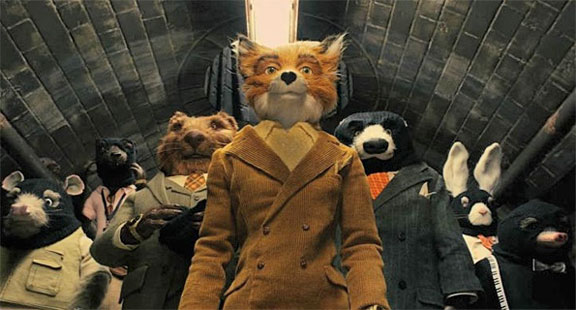
Fantastic Mr. Fox is, quite simply, a fantastic movie. A stop-motion masterpiece by director Wes Anderson, this charming fable about a fox who has been domesticated but still feels the urge to steal chickens from hen houses is a delight. Everyone of the voice actors--and this is some pretty high-powered talent on display--is great. George Clooney as Mr. Fox plays off his own sly public persona, and Meryl Streep as Mrs. Fox is a calm, reassuring, but firm presence. They should be paired again in a live action film. I loved the interplay between Clooney and Bill Murray as Badger, Mr. Fox's partner in crime. Badger isn't always quite up to speed on what's happening, and Mr. Fox is often frustrated by his need to repeat what seem like simple conclusions to his friend. The highlight of the film, though, is the competition between the Fox family's son Ash, voiced by Jason Schwartzman, and a young fox for whom the family takes responsibility, Kristofferson, voiced by Eric Chase Anderson. Ash always loses to Kristofferson, regardless of the contest, but then again, Kristofferson doesn't even realize there's a competition going on. I'd also point out that the set design and decoration are brilliant, a series of quite stunning masterpieces of location. The amount of time and effort the filmmakers have taken to create this gem is well worth it. This was one of my favorite movies from last year. If you haven't seen this movie yet, rent it immediately and enjoy.

It's Complicated is the kind of movie that Hollywood studios used to make, a generic romantic comedy, no particular deep messages involved, just some fun for the actors and the audience. Meryl Streep (again--what a streak she's on these days) is Jane, a divorced woman who runs a bakery. At her son's college graduation, she reunites with her ex-husband Jake, a randy Alec Baldwin (that may be redundant calling Baldwin randy, I realize), and they begin having an affair. Jake is unhappy with his new, younger wife, played by Lake Bell, especially with her non-stop attempts to get pregnant. Simultaneously, Jane begins dating the architect who is designing the addition to her home, Adam, played by Steve Martin. I don't know why Jane needs a bigger kitchen or even a bigger home. She lives in one of those mansions that only movie middle class people own, with huge rooms and lots of pillows and mementos from a lifetime of travel and such. And I also don't know why it would be difficult for her to choose between these two men; she knows what each one of them is like. Then again, we're not supposed to think too deeply about a movie like this. It's all just harmless fun, and it often brought a smile to my face, particularly whenever John Krasinski appeared on screen. He plays Jane's daughter's fiance, and he's hilarious as the only person who knows that Jane and Jake are having an affair. He may never be a big movie star on his own, but Krasinski could make a long career of playing supporting parts like this one.

The Last Station was advertised as a film about the final days in the life of Russian writer Leo Tolstoy (played expertly here by Christopher Plummer). Instead, the main focus of the plot is really on the musings of a young man named Valentin (James McAvoy) who has been sent to keep an eye on Tolstoy to ensure that the great writer's legacy, including his commitment to a life devoid of material things, is preserved--mainly because there are people like Vladimir Chertkov (Paul Giamatti) who want the Tolstoy fortune to support revolutionary changes in Russia. Chertkov's goals are, unsurprisingly, opposed by Tolstoy's wife Sofya (Helen Mirren), who wants to keep the money for herself and her children. Sofya is quite the drama queen, and Mirren is allowed to chew the scenery almost every moment that she's on screen. It's quite a histrionic performance, and I was surprised that it won her another Oscar nomination for Best Actress. This film also brought Plummer his first ever Oscar nomination (his was for Supporting Actor), and it's a shock to realize that such a long, distinguished career as his has never been acknowledged by the Academy before now. All of this would make for an okay film, but in truth, the movie is really more about Valentin and how he comes to understand what Tolstoy stands for. McAvoy's character has to figure out what kind of life he wishes to live, one that follows the teachings of the writer or one that mirrors the way that the writer actually lives. It's an intriguing question about the conflict that often occurs between one's principles and the (messy) real life one has to live. The Last Station isn't without its genuine moments of emotion, particularly Tolstoy's death at the train station of the title, a scene which much have cinched Mirren's nomination in particular. I suppose this was considered an "event film" given the way that it was released. Here in Los Angeles, it played for only one week in only one theater in December in order to be eligible for Academy consideration, and then it disappeared for a while. When it returned, it again only played for a limited time in a limited number of theaters. Perhaps the distributors were hoping to garner more than just two nominations, but frankly, they should have been grateful given the relatively mundane quality of this film overall.

The Loss of a Teardrop Diamond is based upon an unproduced Tennessee Williams screenplay, and it covers some rather familiar territory for the playwright. Bryce Dallas Howard plays Fisher Willow (terrible name for a character, by the way), a Memphis debutante who doesn't quite fit in with the rest of her alleged social circle. Fisher likes to drink and have fun and enjoys jazz music, all of the things that respectable girls in the 1920s weren't supposed to enjoy. She also has feelings for Jimmy (Chris Evans), the son of the man who runs her family's plantation, but since Jimmy is poor, they could never be allowed to marry or have a relationship. No, Fisher must listen to her grandmother, Cornelia (Ann-Margaret in a role that makes you wish she were cast in movies more often), who wants her to settle down and find a respectable young man to marry. The title diamond earring is one of a pair (family heirlooms, of course) loaned to Fisher by her grandmother for a party. Its loss is the subject of quite a number of accusations and plot contrivances, none of which, frankly, matter (although it does allow for an almost nude scene for Evans, an initial suspect in the diamond's disappearance). This is more of a mood piece than a drama anyway. Ellen Burstyn makes a brief appearance as an older woman who has led a remarkable life on her own terms, but whose current health problems will condemn her to a life under the care of her conservative, traditional family. When Howard's Fisher is in the bedroom with Burstyn's Addie, the film truly comes alive, and it's hard to imagine such a static scene would come across so well. Overall, this is certainly a minor work by the great playwright, and I don't really know that there was any urgency to film this screenplay. It isn't a disaster by any means--although some of the actors' attempts at Southern accents do qualify as such--but it also doesn't add much to our knowledge and appreciation of Williams' achievements.

Nine is the film adaptation of the Broadway musical that was itself an adaptation of Federico Fellini's film 8 1/2. Given all of that adaptation, quite a lot has been lost, and the filmmakers haven't helped their cause any by casting the wrong person in almost every role. I admire Daniel Day-Lewis as an actor, but having an Irishman with little singing ability trying to pass himself off as an Italian director is a bit of a stretch even for the talented Day-Lewis. And his character is so utterly lacking in charm or any other personality trait that would make him seem appealing, I kept wondering what all of these women saw in him. To have such a lackluster character as the centerpiece of the film seems a supreme obstacle to overcome. And, to be frank, the way that the director has chosen to present the songs--as all having come from Guido's consciousness and almost all of them presented on the empty sound stage of his next movie--is a mistake, I think. They should be more integrated into the plot rather than being delivered as if they were asides or diversions from what is a very slight storyline anyway. It's really just about Guido not having an idea for his next movie because he's got too many problems with the women in his life; that's it. I'm also not fond of having actors perform in musicals if they have little or no singing ability, and that is the case with much of this cast. Oscar-nominated Penelope Cruz plays Carla, Guido's mistress, as some sort of hot-blooded, oversexed spitfire. I guess it's mean to be a comic role; it certainly had me laughing but for the wrong reasons. Since she can't really sing, the film creates an elaborate production number for "A Call from the Vatican" in order to distract the audience from noticing her slight voice. Only two of the women in the film acquit themselves with their songs. One is, of course, an actual singer, Fergie from the Black Eyed Peas, who sings "Be Italian" with gusto. The other is Marion Cotillard as Guido's wife Luisa, but only in "My Husband Makes Movies," a delicate, gentle song about her feelings of being abandoned by her spouse. I was not as fond of her other number, "Take It All." I liked the staging of "Cinema Italiano" even if I didn't think Kate Hudson's singing was up to par. Nicole Kidman, who has demonstrated her ability to sing in Moulin Rouge!, is at a loss here with the song "Unusual Way" (which, I must confess, I didn't know was from this musical); it's a weak performance. (And she's an Australian playing a German--there's no end to the lunacy of the assignment of roles here.) I've already written too much about a movie that forces Dame Judi Dench to sing and dance her way through the ridiculous "Folies Bergere." A lot of wasted talent and a lot of bad casting choices all round, sad to say.

The Princess and the Frog takes the fairy tale story of the girl who kisses a frog and turns him into a prince and twists it in a few novel ways. This time, the prince doesn't emerge from the kiss; the girl just turns into a frog too. And this isn't set in a period long, long ago in some mythical land far, far away. This is 1920s New Orleans with all of the jazz music and period atmosphere you'd expect. Tiana (Anika Noni Rose), the "princess" of the title, really just wants to live out her father's dream and open a restaurant; she even has a big number ("Almost There") imagining what the restaurant will be like. It's a song and production very reminiscent of Disney's Beauty and the Beast and the "Be Our Guest" number, but I didn't mind the familiarity because Rose and the rest of the cast are able singers and the music by Randy Newman (with help from Dr. John) is very much in the New Orleans style. We wind up in a bayou--much like the one from the 1970s animated film The Rescuers, to be honest--and there's even a Cajun firefly who is, at times, a little too close to being like Evinrude from that earlier Disney film. Still, the lack of originality doesn't detract from the fun to be had with this film. The princess is really just an ordinary young woman in many ways, and the message that anyone could be a princess is delightfully conveyed here. I could quibble with the choice of Bruno Campos as Prince Naveen, Tiana's frog suitor, who's not African American like much of the rest of the cast, but he is so very funny and charming in the part. And there's also the divine Jenifer Lewis as Mama Odie, who represents the good aspects of voodoo, and Terrence Howard as James, who's there as the bad part of voodoo, both of them a delight to hear/watch. Much was made about how The Princess and the Frog was a return to more traditional methods of making animated films (what with drawing and such instead of computers), and I have to say that the final product is quite beautiful, a jewel of a movie and one of the best of the many good animated films released in 2009.

Shutter Island is a bit of a puzzle, and I'm still not certain exactly how I feel about it. Set during the 1950s, Martin Scorcese's film is very exact when it comes to period detail, and there's no shortage of suspense here. I can't really give too many details about the plot without spoiling it for you if you haven't seen it. Leonardo DiCaprio and Mark Ruffalo are federal marshalls sent to the title island to investigate the disappearance of one of the inmates. The remote island is home to a mental institution for the criminally insane, and a female inmate there has allegedly vanished. Mysterious things begin to happen to the marshalls, DiCaprio's character especially, almost immediately after their arrival, and it isn't long before we as audience members start to question what is real and what is imaginary. The plot hinges upon our questioning, and I was intrigued by that possibility until the last fifteen minutes or so. To be honest and without revealing too much, those final minutes almost ruined the entire film for me. It's not easy to watch what is a very skillfully made film with a lot of remarkable talent--including Ben Kingsley, Max Von Sydow, Michelle Williams, Jackie Earle Haley, and the great Patricia Clarkson in small but significant role--and not feel somewhat disappointed by the cheat of an ending. Stylistically, Scorcese has managed to recreate the look and feel of a lot of films from the decade of the 50s, but plot-wise he and the movie are hampered by Laeta Kalogridis' script.

Watercolors is a love story about a young artist named Danny (Tye Olson) who falls in love with a member of the swim team, Carter (Kyle Clare), who at first resists his attraction to Danny. It's become something of a cliche in gay films to have the shy and sensitive artist fall in love with a jock, and this movie doesn't often rise above the level of cliche, to be honest. The film begins with the adult Danny (Ian Rhodes) at his first solo art exhibit, and we realize that he's been painting images of his high school lover over and over again, much to the chagrin of his current boyfriend, Allan (Edward Finlay). I know that movies like this are important for young people to see; it helps to realize that other people are going through some of the same issues that you are. However, as an older gay man, I've grown a bit tired of watching films that duplicate this plot again and again since these films seem to be excuses to show handsome (well, handsome to some people, I suppose) young men in various states of undress. And Clare's Carter, in particular, spends a lot of time in his Speedos or underwear or nude posing for Danny. Not that I have anything against that on principle, mind you. I just think movies should do a bit more than titillate sometimes. I did admire how supportive Danny's mother (Casey Kramer) and his close friend Amy (Ellie Araiza) and, in particular, his art teacher (the great Karen Black) are, and the three women in those roles are all talented actresses. Unsurprisingly, there is a tragedy at the heart of this film that has led to Danny's artistic obsession. If you've seen gay films before about the coming out experience, you can probably figure it out for yourself. If not, consider this film a template for your future viewings of such movies; they probably won't venture too much from this standard plot either, but at least you'll get to see some cute young boys in their underwear.
Sunday, February 7, 2010
Invictus

Invictus is a spare and noble film about the importance of and difficulty in achieving a measure of acceptance and even solidarity among people of different cultural and racial backgrounds. Set in South Africa in 1995, not long after the election of Nelson Mandela to be the first black president of that country, Invictus depicts the sharp divisions between whites and blacks at that time. Even though you expect to see a strong sense of unity by the end of the film--and you know you won't be disappointed--what director Clint Eastwood and stars Morgan Freeman and Matt Damon manage to achieve is nonetheless admirable and even enjoyable to watch. You might even, as I did, find yourself interested in the outcome of a rugby match upon which, seemingly, the fate of South African hinges.
Yes, that's right, rugby--a sport with which I am completely unfamiliar--is the means by which Freeman's Mandela plans to unite the blacks and whites of his country. He notices not longer after taking office that the national team, the Springboks, is automatically granted one of the spots for the World Cup of 1995 because South Africa is the host country. He attends a match and notices that only the whites seem to support the team. Blacks tend to favor soccer, a point illustrated at the beginning of the film when you watch a soccer match played by poor blacks and a rugby match played by rich whites on opposite sides of the road down which the newly freed Mandela is traveling. It's a somewhat heavy-handed way of displaying the sharp divides in the country, but I suppose you need a context for the brief history lesson that also opens the film.
Mandela, trying his best to get his country past the desire on the part of blacks for retribution and the fear on the part of whites of that same retribution, reaches out to the captain of the Springboks, Damon's Francois Pienaar, an Afrikaner (white), to assist him. He doesn't say that, of course. He only hints or suggests it. And Francois is somewhat uncertain as to how to get his less-than-stellar team to engender much of a following in the black community. There's only one black member of the team, Chester, who is something of a national hero. Pienaar, at the urging of Mandela, takes the team to a series of rugby clinics in the poor black townships. We watch some bonding between the guys on the team and the young blacks who come out to play. The team also makes a visit to the prison where Mandela was held captive for more than twenty years, and it's there that Pienaar seems to have his most profound epiphany.
That sequence is also where the film takes its one flight from realistic depictions of these events. Wherever he turns at the prison, Pienaar seems to see a shadowy image of Mandela and what his days there must have been like, whether being confined to his tiny cell or breaking rocks in the yard alongside the other prisoners. It's a bit disconcerting to watch these moments, given how much attention has been given to recreating the time period in realistic terms. However, it doesn't detract from the overall film's success, and it does provide a means for understanding the change of heart that Pienaar seems to have had about the destiny of the team and his home country.
Freeman, as you might expect, is excellent as Mandela. Although many have criticized his accent here, I think he manages to capture both the speech patterns and the mannerisms of the former South African president, and he achieves a much more difficult act of representation: the smile for which Mandela is so well known. It's as if he shines from within when he smiles, making it all the more interesting when you know the mistreatment that he suffered at the hands of the previous white-controlled government. Freeman never loses sight of the actual man; he just allows us to see just how fervently committed to a peaceful unity Mandela was. I can't imagine anyone else in the role, and frankly, I can't imagine that anyone else could do as good of a job.
When casting the part of a rugby team captain, Damon might not be the first person who comes to mind, but he acquits himself nicely here. Gone is his familiar Boston accent, replaced by a carefully controlled Afrikaner one instead. And, despite his role as a rugby player, Damon has to bring a level of gravitas to many of the scenes he plays. When he tells his team during the World Cup final match against New Zealand, "This is it. This is our destiny," you have to believe those words. They could easily devolve into cliche, but thanks to Damon's consistency throughout the film, they ring true.
The title Invictus comes from a Victorian era poem by William Ernest Henley. It's a relatively brief poem, just four stanzas, and it's one that Mandela memorized during his time in prison. He recites some of the key lines at one point in the movie, and he writes out a copy to give to Pienaard. The poem is about overcoming one's negative circumstances, about finding a sense of hope in a time of darkness. The last couple of lines, "I am the master of my fate:/I am the captain of my soul," served as a source of inspiration to Mandela, and he hopes the same fate will happen to Damon's Pienaar. I'm glad to see a movie use a poem as such a key plot point. It isn't a particularly good poem, but it's sentiment is honestly expressed.
I might say the same about Invictus. I think it earns its emotional resonance honestly. Thanks, at least in part, to the unobtrusive directing style for which Eastwood has become known, we are allowed to witness the events of the narrative without being manipulated too often or too heavily. There are no directorial flourishes here, just good, somewhat old-fashioned storytelling that gets to the heart of the racial divide in South Africa. At times, some of the white characters act in ways that suggest that they are still fearful or resentful of a black-led government, and at times, some of the black characters behave as if they feel the whites should all be punished. It doesn't make them into stereotypes or caricatures, though, because they are almost always balanced by another character (and it's usually Freeman's Mandela) who tries to restore a sense of balance. It's a tricky achievement to depict that, but one that Invictus manages to reach.
Sunday, January 24, 2010
Nutty Neighbors: The Definition of Stupidity
A little context first. I live in one of the largest apartment complexes in the country (if not the world). We have more than 4,000 units here, and in my building alone, there are 156 apartments. If you figure that, on average, each apartment has two tenants--several have lots more than two--that means at least 300 people could be living in just this building. There are thousands of people who live within the several city blocks covered by this complex.
Beyond just lots of residents, though, we also have visitors and delivery persons and the mail carriers and people who leave fliers hanging on the doorknobs and no telling who else stopping by. Yes, there is a fence surrounding the property, but that's to keep cars out more than people. Anyone can walk into the complex without being stopped or questioned. It happens all the time.
Imagine my surprise, then, when I returned home one day this past week to find the following:

That's right. Godzilla and Hermey apparently leave a set of keys to the front door of her apartment under the tiny little doormat. The keys were just lying on the carpet in front of her door in the middle of the afternoon. Perhaps the maintenance workers for the building accidentally moved the mat while vacuuming or something. I don't know. I was just dumbstruck to see that someone could be so foolish as to leave a set of keys outside the apartment door, available to anyone who might want to use them. I'm surprised the neighbors haven't had every last possession stolen from them. Apparently, they want their friends to be able to enter the apartment at all hours of the day or night whether they are home or not.
Godzilla--or perhaps it's Hermey--has taken precautions since that fateful day last week. No longer are the keys just left under the mat for just anyone to find. No, now they are stuck to the bottom of the doormat. Again, I am just dumbfounded by the lunacy of the neighbors.

I took the second picture because I had to see what had happened to the keys. I mistakenly assumed they'd put them on a key chain and keep them in a safe place after discovering how easily the location of the keys could be revealed. Not Godzilla and Hermey. You'd think that living in a city of several million people would make you a little more reluctant to do something as stupid as leaving the keys to your apartment under a doormat. Who does that nowadays?
I will admit to being torn emotionally when I saw the keys just lying on the carpet. I considered taking them and hiding them or throwing them down the garbage chute just to be spiteful. I didn't, though, so you can rest easy. My conscience go the better of me, I suppose. Momentarily, anyway. Of course, I don't think everyone would be as kind to Godzilla and Hermey as I was. One of these days, if they aren't careful, one of their "friends" or perhaps even a stranger may avail himself or herself of the opportunity to go on a "shopping spree," and maybe then they'll learn that grown-ups have better sense than to leave keys under doormats in a large apartment complex in the middle of a huge metropolitan area.
Beyond just lots of residents, though, we also have visitors and delivery persons and the mail carriers and people who leave fliers hanging on the doorknobs and no telling who else stopping by. Yes, there is a fence surrounding the property, but that's to keep cars out more than people. Anyone can walk into the complex without being stopped or questioned. It happens all the time.
Imagine my surprise, then, when I returned home one day this past week to find the following:

That's right. Godzilla and Hermey apparently leave a set of keys to the front door of her apartment under the tiny little doormat. The keys were just lying on the carpet in front of her door in the middle of the afternoon. Perhaps the maintenance workers for the building accidentally moved the mat while vacuuming or something. I don't know. I was just dumbstruck to see that someone could be so foolish as to leave a set of keys outside the apartment door, available to anyone who might want to use them. I'm surprised the neighbors haven't had every last possession stolen from them. Apparently, they want their friends to be able to enter the apartment at all hours of the day or night whether they are home or not.
Godzilla--or perhaps it's Hermey--has taken precautions since that fateful day last week. No longer are the keys just left under the mat for just anyone to find. No, now they are stuck to the bottom of the doormat. Again, I am just dumbfounded by the lunacy of the neighbors.

I took the second picture because I had to see what had happened to the keys. I mistakenly assumed they'd put them on a key chain and keep them in a safe place after discovering how easily the location of the keys could be revealed. Not Godzilla and Hermey. You'd think that living in a city of several million people would make you a little more reluctant to do something as stupid as leaving the keys to your apartment under a doormat. Who does that nowadays?
I will admit to being torn emotionally when I saw the keys just lying on the carpet. I considered taking them and hiding them or throwing them down the garbage chute just to be spiteful. I didn't, though, so you can rest easy. My conscience go the better of me, I suppose. Momentarily, anyway. Of course, I don't think everyone would be as kind to Godzilla and Hermey as I was. One of these days, if they aren't careful, one of their "friends" or perhaps even a stranger may avail himself or herself of the opportunity to go on a "shopping spree," and maybe then they'll learn that grown-ups have better sense than to leave keys under doormats in a large apartment complex in the middle of a huge metropolitan area.
Sunday, January 10, 2010
Quick Takes 3: Dream Warriors
At this time of year, it's tough to sort through the movies I've seen. Some of them will undoubtedly be nominated for the Best Picture Oscar, especially now that the list has been expanded to include ten films. Those films should really be "saved" for my other blog, so I'm going to discuss films I've seen recently that stand little chance of making it to the final ten in this year's race. I'm not suggesting that they are not worthy films--several of them are exceptional--merely that they don't seem to be generating the kind of "buzz" that gets a movie nominated for the top honor.

Bright Star is the fictional rendering of the love affair between the English Romantic poet John Keats and a remarkable young woman named Fanny Brawne. Keats is already sick with the tuberculosis that will cut his life short, but he cannot stop from developing feelings for the extraordinary Fanny. As played by the gifted Abbie Cornish, Fanny is a strong woman possessed of a keen intellect and a talent for making herself into an artistic creation through her needlework. Directed by Jane Campion, Bright Star deserved greater attention than it received, and if there were any justice, Cornish would be nominated for Best Actress (and deservedly win) for her portrayal of a woman who has to come to terms with the potential loss of the love of her life. Kudos also to Ben Whishaw, who was also good in the completely unnecessary remake of Brideshead Revisited, as the doomed poet and to cinematographer Greig Fraser. Bright Star is simply one of the most beautiful films of the past decade thanks to Fraser's camera work. I will never forget some of the visuals of this film, including a field of lavender flowers and a moment when Fanny lies on her bed allowing curtains to billow over her body--extraordinary moments in a great movie.

The Messenger takes as its subject the difficult work of informing family members of the death of a loved one in the military. It's a serious movie about a formidable task, one that you'd expect few soldiers want to have. Ben Foster stars as Staff Sergeant Will Montgomery, who has been injured in Iraq and is now assigned to work with Woody Harrelson's Captain Tony Stone delivering the bad news to the next of kin. We watch as Montgomery slows learns the nuances of the job and even becomes skilled at going around the military's protocol when dealing with the grieving parents and wives and other family members with whom he and Stone come into contact. He also develops a genuine affection for a young widow played by Samantha Morton, and their friendship almost becomes too much for both of them. It could have been played for cheap emotions, but thanks to a solid script and talented actors, viewers instead sense a tender connection between two lonely people. Anchored by three strong performances, especially the luminous Morton, The Messenger is a complex study of the emotional impact that the current war can have on the people back home.

I found Sherlock Holmes to be typical blockbuster fare, and that's too bad. The potential was there with the inspired pairing of Robert Downey Jr. as Sherlock Holmes and Jude Law as Watson, and perhaps the best part of the movie is their verbal sparring, especially when they are squabbling over such matters as the cleanliness of Holmes' rooms in the house they share. However, the plot seemed unnecessarily complicated, maybe in an attempt to get the crowd to stay until the end of the film so that Holmes could explain all of the connections that we could never have made ourselves, thanks to the stinginess of the script. The stories by Arthur Conan Doyle were frequently action-oriented, but they also had a cerebral quality to them with Holmes figuring out clues and piecing together motives. The movie version goes almost exclusively for action, with one big, expensive sequence after another. Having read "A Scandal in Bohemia," the Holmes story that includes the character of Irene Adler and how she outsmarted Holmes once, I had hoped that more could be done with the character being played here by Rachel McAdams. No such luck, though, because she's really secondary to a plot about a cult of magician types led by Mark Strong's Lord Blackwood. This film really is a mess, but at least, we know there will be a sequel, so maybe there's a chance at redemption yet.

A Single Man has justly received praise for the performance of Colin Firth as George, the college professor attempting to come to terms with the death of his long-time partner. Firth is a revelation here, particularly in the scene where he learns of Jim's death in a car accident and that the family doesn't wish him to attend to funeral. Taking place over a single day in George's life, a rather fateful day when he has chosen to commit suicide, A Single Man does a nice job of evoking the mood of the early 1960s when then film is set, but I did feel director Tom Ford was a bit too obsessed with the appearances of everything, actors included. There's a hypersheen to the visuals that makes them seem somewhat unrealistic, especially in the black-and-white sequences that serve as flashbacks for moments of Tom and George's life together. And I never quite understood what Ford was trying to accomplish with all of the images of eyes that appear throughout the film; I'm sure there's meant to be some symbolic weight to them all, but I couldn't figure it out thanks to how numerous and seemingly random they were. It was a delight to see Julianne Moore as Charley, George's long-time friend, an aging party girl who wishes he were attracted to her. It makes me want to see her and Firth in movies more often, just ones that are less concerned with how people look and more interested in how they think and feel.

The Young Victoria is a visual feast of a movie. It concerns the early years of the reign of Queen Victoria of England, when she was little more than a teenager. As played by Emily Blunt, Victoria is inexperienced but clever, a very fast learner in the ways of the monarchy. She meets a Belgian prince, Albert (played by Rupert Friend), and begins to fall in love with him. However, her mother (Miranda Richardson) and her mother's chief advisor (Mark Strong again, cornering the market on English baddies for the Christmas season) have other plans for her future. She also has to face conflicting political advice from such men as Paul Bettany's Lord Melbourne and Michael Maloney's Sir Robert Peel, the two prime ministers who serve during the start of her historic reign, still the longest in English history. However, the political intrigue tends to become of secondary importance when Victoria and Albert begin to express how they feel for each other. Blunt and Friend are very good together. They have a very natural chemistry, and the film does a fine job of depicting the strength of the bond Victoria and Albert had for each other. This is another film that has been sadly underrated. Perhaps moviegoers are just not interested in historical dramas these days unless there are going to be some explosions along the way? That would be very sad if it were true.
I'm pleasantly surprised by how many good performances I saw in the last couple of months. It's an impressive list just from the five movies described above: Abbie Cornish, Ben Whishaw, Ben Foster, Woody Harrelson, Samantha Morton, Jude Law, Robert Downey Jr., Colin Firth, Julianne Moore, Emily Blunt, and Rupert Friend. Heck, I'll even add Mark Strong to the list; he's actually guite good as a bad guy, and I enjoyed the gusto with which he portrayed Holmes's nemesis. And that doesn't even include a lot of supporting cast members such as the children in Bright Star, especially Edie Martin as Toots, Matthew Goode as Jim in the too-few scenes in which he appears in A Single Man, and Jim Broadbent as King William and Harriet Walter as Queen Adelaide (and Richardson, too, as the Duchess of Kent) in The Young Victoria. Great performances, all of them.

Bright Star is the fictional rendering of the love affair between the English Romantic poet John Keats and a remarkable young woman named Fanny Brawne. Keats is already sick with the tuberculosis that will cut his life short, but he cannot stop from developing feelings for the extraordinary Fanny. As played by the gifted Abbie Cornish, Fanny is a strong woman possessed of a keen intellect and a talent for making herself into an artistic creation through her needlework. Directed by Jane Campion, Bright Star deserved greater attention than it received, and if there were any justice, Cornish would be nominated for Best Actress (and deservedly win) for her portrayal of a woman who has to come to terms with the potential loss of the love of her life. Kudos also to Ben Whishaw, who was also good in the completely unnecessary remake of Brideshead Revisited, as the doomed poet and to cinematographer Greig Fraser. Bright Star is simply one of the most beautiful films of the past decade thanks to Fraser's camera work. I will never forget some of the visuals of this film, including a field of lavender flowers and a moment when Fanny lies on her bed allowing curtains to billow over her body--extraordinary moments in a great movie.

The Messenger takes as its subject the difficult work of informing family members of the death of a loved one in the military. It's a serious movie about a formidable task, one that you'd expect few soldiers want to have. Ben Foster stars as Staff Sergeant Will Montgomery, who has been injured in Iraq and is now assigned to work with Woody Harrelson's Captain Tony Stone delivering the bad news to the next of kin. We watch as Montgomery slows learns the nuances of the job and even becomes skilled at going around the military's protocol when dealing with the grieving parents and wives and other family members with whom he and Stone come into contact. He also develops a genuine affection for a young widow played by Samantha Morton, and their friendship almost becomes too much for both of them. It could have been played for cheap emotions, but thanks to a solid script and talented actors, viewers instead sense a tender connection between two lonely people. Anchored by three strong performances, especially the luminous Morton, The Messenger is a complex study of the emotional impact that the current war can have on the people back home.

I found Sherlock Holmes to be typical blockbuster fare, and that's too bad. The potential was there with the inspired pairing of Robert Downey Jr. as Sherlock Holmes and Jude Law as Watson, and perhaps the best part of the movie is their verbal sparring, especially when they are squabbling over such matters as the cleanliness of Holmes' rooms in the house they share. However, the plot seemed unnecessarily complicated, maybe in an attempt to get the crowd to stay until the end of the film so that Holmes could explain all of the connections that we could never have made ourselves, thanks to the stinginess of the script. The stories by Arthur Conan Doyle were frequently action-oriented, but they also had a cerebral quality to them with Holmes figuring out clues and piecing together motives. The movie version goes almost exclusively for action, with one big, expensive sequence after another. Having read "A Scandal in Bohemia," the Holmes story that includes the character of Irene Adler and how she outsmarted Holmes once, I had hoped that more could be done with the character being played here by Rachel McAdams. No such luck, though, because she's really secondary to a plot about a cult of magician types led by Mark Strong's Lord Blackwood. This film really is a mess, but at least, we know there will be a sequel, so maybe there's a chance at redemption yet.

A Single Man has justly received praise for the performance of Colin Firth as George, the college professor attempting to come to terms with the death of his long-time partner. Firth is a revelation here, particularly in the scene where he learns of Jim's death in a car accident and that the family doesn't wish him to attend to funeral. Taking place over a single day in George's life, a rather fateful day when he has chosen to commit suicide, A Single Man does a nice job of evoking the mood of the early 1960s when then film is set, but I did feel director Tom Ford was a bit too obsessed with the appearances of everything, actors included. There's a hypersheen to the visuals that makes them seem somewhat unrealistic, especially in the black-and-white sequences that serve as flashbacks for moments of Tom and George's life together. And I never quite understood what Ford was trying to accomplish with all of the images of eyes that appear throughout the film; I'm sure there's meant to be some symbolic weight to them all, but I couldn't figure it out thanks to how numerous and seemingly random they were. It was a delight to see Julianne Moore as Charley, George's long-time friend, an aging party girl who wishes he were attracted to her. It makes me want to see her and Firth in movies more often, just ones that are less concerned with how people look and more interested in how they think and feel.

The Young Victoria is a visual feast of a movie. It concerns the early years of the reign of Queen Victoria of England, when she was little more than a teenager. As played by Emily Blunt, Victoria is inexperienced but clever, a very fast learner in the ways of the monarchy. She meets a Belgian prince, Albert (played by Rupert Friend), and begins to fall in love with him. However, her mother (Miranda Richardson) and her mother's chief advisor (Mark Strong again, cornering the market on English baddies for the Christmas season) have other plans for her future. She also has to face conflicting political advice from such men as Paul Bettany's Lord Melbourne and Michael Maloney's Sir Robert Peel, the two prime ministers who serve during the start of her historic reign, still the longest in English history. However, the political intrigue tends to become of secondary importance when Victoria and Albert begin to express how they feel for each other. Blunt and Friend are very good together. They have a very natural chemistry, and the film does a fine job of depicting the strength of the bond Victoria and Albert had for each other. This is another film that has been sadly underrated. Perhaps moviegoers are just not interested in historical dramas these days unless there are going to be some explosions along the way? That would be very sad if it were true.
I'm pleasantly surprised by how many good performances I saw in the last couple of months. It's an impressive list just from the five movies described above: Abbie Cornish, Ben Whishaw, Ben Foster, Woody Harrelson, Samantha Morton, Jude Law, Robert Downey Jr., Colin Firth, Julianne Moore, Emily Blunt, and Rupert Friend. Heck, I'll even add Mark Strong to the list; he's actually guite good as a bad guy, and I enjoyed the gusto with which he portrayed Holmes's nemesis. And that doesn't even include a lot of supporting cast members such as the children in Bright Star, especially Edie Martin as Toots, Matthew Goode as Jim in the too-few scenes in which he appears in A Single Man, and Jim Broadbent as King William and Harriet Walter as Queen Adelaide (and Richardson, too, as the Duchess of Kent) in The Young Victoria. Great performances, all of them.
Friday, January 1, 2010
Taking Stock: 2009
Last year was a better year for movies and movie-watching for me. I managed to see 49films in the theaters in 2009, almost double the number I saw in 2008. I caught another dozen movies on DVD, but most of them were older films, not new releases. I read fewer books this past year, just 38, compared to the 43 I read in 2008, but to be honest, a lot of the books for 2009 were longer and took a far greater amount of time to read. One doesn't just skim through Arthur Laurents' Original Story by in a hurry. I even got out of the house to see fifteen plays or musicals this past year, and I was lucky enough to perform in a play as well. Here's hoping that 2010 brings even more opportunities to read and watch and enjoy.
Favorite Movie: Inglourious Basterds. Does anyone have more fun thinking up ideas for movies and then executing them than Quentin Tarentino? A wildly imaginative piece of speculative fiction, Inglourious Basterds leads us to wonder what would have happened had a band of Jewish-American soldiers (under the leadership of Brad Pitt in a hilarious, loopy performance) decided to take revenge for the Nazi atrocities during World War II and killed Hitler at a screening of a terrible propaganda film. Anchored by the astonishing performance of Christoph Waltz as Col. Hans Landa, and for whom there has been universal praise, this film managed to divide audiences, but I still don't think there's anyone as talented and audacious as Tarentino working in movies today. I just wish he worked more often so we could get more movies like this.
Runner-Up: Adventureland. This is a small movie about a young man who spends his summer working at a local amusement park, falling in love and having a lot of those "first time" experiences. The trailer for the film made it seem like it was some sort of fraternity-boy comedy, but in truth, Adventureland is sweet and romantic and charming. It's a shame too few people went to see this movie. It only played in theaters for a short while during the spring. Maybe it was the fact that the movie is set in the late 1980s, and we're not ready to revisit that era yet. However, even though I was already a college graduate (twice) by that time, I found so many moments in the life of Jesse Eisenberg's James that resonated with my own experiences. It's worth renting to catch this gem.
P.S. I'd also like to mention how much I engjoyed getting a chance to see the short films, both animated and live action, that were nominated for Oscars for 2008. Someone had the bright idea to package them (and throw in a few more notable short films) and put them into theaters. I've written about all of these films on my other blog, but they provided some of my favorite moments in movie-watching last year. It takes real talent to compress a story into a few moments and have an impact, but the film makers of these shorts succeeded. I hope that this year's crop of nominees is similarly honored by being released for the movie-going public to enjoy.
Favorite Performance (Female): Abbie Cornish in Bright Star. Cornish plays Fanny Brawne, the young woman with whom English Romantic poet John Keats fell in love. If the real Fanny were anything like Cornish's performance, you can understand why. She's luminous and quite understated as an actress, allowing you to see glimpses of how she has internalized her emotions. Watching Fanny convey her talent through her sewing and then seeing her learn to understand and appreciate Keats' poems are both revelatory moments in Cornish's hands. She is ably surrounded by wonderful actors, including Ben Whishaw as Keats, but if you had the chance to experience this beautiful but sadly underseen film by the great Jane Campion, you won't quickly forget Cornish. She gives one of the best performances of the past decade, in my opinion.
Runner-Up: Gabourey Sibide and Mo'Nique in Precious: Based on the Novel Push by Sapphire. The title is ridiculously long (and kind of ridiculous), but the performances are first rate. Mo'Nique has justly been lauded for her work as one of the darkest characters in recent film history. She's a heartless, opportunistic, scheming woman who seems to feel no pleasure or joy in life. Her last scene in the film reveals a monstrous personality; I don't know how anyone could pull it off as well as she does. I do think Sibide is her equal here even though she has the quieter role. She has to portray a victim of abuse, yet we also need to see just how much spirit she manages to keep inside her despite the constant ridicule of her own mother and the ways that society seems to be against her. Both women are amazing to watch together. Their scenes have a vitality and energy and even a sense of fear and tension that you don't see in the movies enough these days.
Favorite Performance (Male): Joseph Gordon-Levitt in (500) Days of Summer. Who knew when we were watching Gordon-Levitt years ago on Third Rock from the Sun that we were witnessing the start of a great career? Gordon-Levitt has been stunningly good in movies as diverse as Mysterious Skin and Brick. Now he adds this charming little movie to his resume. He plays a young architect stuck in the wrong job and in love with what turns out to be the wrong girl. Gordon-Levitt's part is the best written in the movie, which is more than a little unkind to its lead female character, and he makes us empathize with all of the ups and downs that his character faces. And you have to love the expression on his face during the musical number choreographed to a Hall & Oates song. It does a fantastic job of capturing how it feels the morning after your first time with someone.
Runners-Up: Gael Garcia Bernal and Diego Luna in Rudo y Cursi. Reunited years after their hit Y Tu Mama Tambien, Bernal and Luna here play brothers who are recruited to play professional soccer but on different teams. The film gives almost equal time to each actor, and they are both good as they reveal how emotions like familial love and professional (and personal) jealousy can drive people to engage in some stupid behavior at times. These two brothers try to support each other, but they just can't help but become selfish at times too. This movie was little seen in the United States, but it deserves attention for the performances by these two fine young actors.
P.S. I'd also like to note the astounding work by Jeremy Renner in The Hurt Locker. As a man who can't seem to live without the thrill of his high-pressure job of dismantling bombs, Renner taps into the rage and sadness of a generation of soldiers. It's a stunning movie and a great performance by him in the lead.
Favorite Play: Leslie Jordan: Full of Gin & Regret. This performance consisted primarily of Jordan and a microphone and a bare stage. But when you have the stories to tell that Jordan does, you don't need more than that. Best known for his work on Will & Grace or his role as Brother Boy in Sordid Lives, Jordan has several decades' worth of material on the entertainment industry, his Southern family, even his love life, and it's always a pleasure to travel down memory lane with him. His stories are not always for the faint of heart, as even he would admit, but his personality and charm make you want to listen.
Favorite Musical: Monty Python's Spamalot. This touring company production of the Broadway show managed to capture all of the silliness of the movie upon which it is based and to send up the whole genre of musical theater while it does so. John O'Hurley, best known for his work on Seinfeld and on the American version of Dancing with the Stars, made a wonderful King Arthur, and he received able help from the supporting cast, particularly Merle Dandridge as The Lady of the Lake. I loved her song "The Diva's Lament" about how long it's been in the show since she was featured. I don't know that you'll necessarily sing the songs after you leave the theater, but you'll probably be humming "The Song That Goes Like This" for a few days afterward.
Runner-Up: Guys and Dolls. This was a production done by my college, which has a remarkable Theater Arts Department. They took a musical that has been done many times, including a movie version, and made it entertaining and dazzling and fun. Kudos, in particular, to the male chorus of the show. Their singing and dancing got the loudest applause of the evening and deservedly so. And the performance by Ryan A. Coon as Nicely-Nicely Johnson, especially his rendition of "Sit Down, You're Rockin' the Boat," was a showstopper.
Favorite Books (Fiction): Rainbow Boys, Rainbow High, and Rainbow Road by Alex Sanchez. This trio of books follows the adventures of three gay high school boys as they come to terms with their sexuality. Two of the boys fall in love with each other--the romance is handled with great tenderness and sweetness--and the other one is initially jealous. However, he too manages to have a few romantic moments along the way. In one of the books, the boys take a cross-country trip that is really a journey into a greater understanding of the gay community and its culture and history. I wish I had had books like this when I was a teenager. I know Sanchez has said he only planned a trilogy involving his characters of Jason, Kyle, and Nelson, but I would like to know what happened to them in college and later in life. That's how engrossing these books are.
Favorite Book (Non-Fiction): The World without Us by Alan Weisman. Weisman takes on an interesting premise here: what would happen if the human population somehow disappeared from the Earth? Could the Earth recover, and how would it do so? He then talks to scientists and others who discuss sites around the world where nature seems to have regained control over what had been the domain of man. It's a fascinating read and an intriguing bit of speculative writing. He never spends too much time bogged down in the science of whatever issue he's discussing, but there's enough there to give you a sense, for example, of how a city of buildings would eventually collapse without the constant attention of humans. It's a compelling book about the ways in which we have damaged the Earth and how we might be able to restore it.
Favorite Book (Poetry): The World of the Ten Thousand Things by Charles Wright. Wright is from my part of the country, a Southerner by birth. He pays attention to details, and his descriptions of the landscape are so beautifully rendered. I hadn't read his book since it was assigned to me in college more than a decade ago. Oddly enough, I read it while at the University of Southern California, not Mississippi State University, despite its focus (at times) on Wright's home region. Reading this collection of poems again was like getting in touch with an old friend. Wright has moved beyond the subject matter of his regional roots, but his work is clearly still influenced by the sense of connectedness he learned while growing up in rural Tennessee.
Highlight of the Year: I had a blast seeing Barry Manilow at the Hollywood Bowl this fall with five dear friends. We sang along to all of his hits, and I had an opportunity to remember the last time I saw him perform live, 1977 at the Ravinia Arts Festival in Illinois. He's older now and doesn't dance around the stage quite as much, but he still puts on a spectacular show. I never had a chance to see him perform live during the intervening 30+ years and I stopped buying his records sometime in the mid-1980s, but it was such a thrill to get to hear him one more time. And I will likely never forget the sight of all those glowsticks with his name emblazoned on the side lighting up the hillside.
Runner-Up: I was invited to participate in a staged reading of The Laramie Project: Ten Years Later: An Epilogue in October, and despite not having performed on stage since my junior year in high school, I agreed. I was given three small parts with only a few lines each so, thankfully, I had no major blocks of dialogue to remember or perform. The play itself, a follow-up to the Tectonic Theatre Project's original production on the impact of the death of Matthew Shepard, is brilliant and emotional stuff. I had a chance to watch real actors going through the process of preparing for their roles, and I got to watch some astounding performances through the rehearsal process and then in the three actual productions we had on National Coming Out Day. I feel privileged to have been a part of what turned out to be something of a national phenomenon, with more than 100 productions throughout the United States on the same day, including one at Lincoln Center in New York. You don't get many chances like that in life, so it's best to take advantage of them when you do.
Favorite Movie: Inglourious Basterds. Does anyone have more fun thinking up ideas for movies and then executing them than Quentin Tarentino? A wildly imaginative piece of speculative fiction, Inglourious Basterds leads us to wonder what would have happened had a band of Jewish-American soldiers (under the leadership of Brad Pitt in a hilarious, loopy performance) decided to take revenge for the Nazi atrocities during World War II and killed Hitler at a screening of a terrible propaganda film. Anchored by the astonishing performance of Christoph Waltz as Col. Hans Landa, and for whom there has been universal praise, this film managed to divide audiences, but I still don't think there's anyone as talented and audacious as Tarentino working in movies today. I just wish he worked more often so we could get more movies like this.
Runner-Up: Adventureland. This is a small movie about a young man who spends his summer working at a local amusement park, falling in love and having a lot of those "first time" experiences. The trailer for the film made it seem like it was some sort of fraternity-boy comedy, but in truth, Adventureland is sweet and romantic and charming. It's a shame too few people went to see this movie. It only played in theaters for a short while during the spring. Maybe it was the fact that the movie is set in the late 1980s, and we're not ready to revisit that era yet. However, even though I was already a college graduate (twice) by that time, I found so many moments in the life of Jesse Eisenberg's James that resonated with my own experiences. It's worth renting to catch this gem.
P.S. I'd also like to mention how much I engjoyed getting a chance to see the short films, both animated and live action, that were nominated for Oscars for 2008. Someone had the bright idea to package them (and throw in a few more notable short films) and put them into theaters. I've written about all of these films on my other blog, but they provided some of my favorite moments in movie-watching last year. It takes real talent to compress a story into a few moments and have an impact, but the film makers of these shorts succeeded. I hope that this year's crop of nominees is similarly honored by being released for the movie-going public to enjoy.
Favorite Performance (Female): Abbie Cornish in Bright Star. Cornish plays Fanny Brawne, the young woman with whom English Romantic poet John Keats fell in love. If the real Fanny were anything like Cornish's performance, you can understand why. She's luminous and quite understated as an actress, allowing you to see glimpses of how she has internalized her emotions. Watching Fanny convey her talent through her sewing and then seeing her learn to understand and appreciate Keats' poems are both revelatory moments in Cornish's hands. She is ably surrounded by wonderful actors, including Ben Whishaw as Keats, but if you had the chance to experience this beautiful but sadly underseen film by the great Jane Campion, you won't quickly forget Cornish. She gives one of the best performances of the past decade, in my opinion.
Runner-Up: Gabourey Sibide and Mo'Nique in Precious: Based on the Novel Push by Sapphire. The title is ridiculously long (and kind of ridiculous), but the performances are first rate. Mo'Nique has justly been lauded for her work as one of the darkest characters in recent film history. She's a heartless, opportunistic, scheming woman who seems to feel no pleasure or joy in life. Her last scene in the film reveals a monstrous personality; I don't know how anyone could pull it off as well as she does. I do think Sibide is her equal here even though she has the quieter role. She has to portray a victim of abuse, yet we also need to see just how much spirit she manages to keep inside her despite the constant ridicule of her own mother and the ways that society seems to be against her. Both women are amazing to watch together. Their scenes have a vitality and energy and even a sense of fear and tension that you don't see in the movies enough these days.
Favorite Performance (Male): Joseph Gordon-Levitt in (500) Days of Summer. Who knew when we were watching Gordon-Levitt years ago on Third Rock from the Sun that we were witnessing the start of a great career? Gordon-Levitt has been stunningly good in movies as diverse as Mysterious Skin and Brick. Now he adds this charming little movie to his resume. He plays a young architect stuck in the wrong job and in love with what turns out to be the wrong girl. Gordon-Levitt's part is the best written in the movie, which is more than a little unkind to its lead female character, and he makes us empathize with all of the ups and downs that his character faces. And you have to love the expression on his face during the musical number choreographed to a Hall & Oates song. It does a fantastic job of capturing how it feels the morning after your first time with someone.
Runners-Up: Gael Garcia Bernal and Diego Luna in Rudo y Cursi. Reunited years after their hit Y Tu Mama Tambien, Bernal and Luna here play brothers who are recruited to play professional soccer but on different teams. The film gives almost equal time to each actor, and they are both good as they reveal how emotions like familial love and professional (and personal) jealousy can drive people to engage in some stupid behavior at times. These two brothers try to support each other, but they just can't help but become selfish at times too. This movie was little seen in the United States, but it deserves attention for the performances by these two fine young actors.
P.S. I'd also like to note the astounding work by Jeremy Renner in The Hurt Locker. As a man who can't seem to live without the thrill of his high-pressure job of dismantling bombs, Renner taps into the rage and sadness of a generation of soldiers. It's a stunning movie and a great performance by him in the lead.
Favorite Play: Leslie Jordan: Full of Gin & Regret. This performance consisted primarily of Jordan and a microphone and a bare stage. But when you have the stories to tell that Jordan does, you don't need more than that. Best known for his work on Will & Grace or his role as Brother Boy in Sordid Lives, Jordan has several decades' worth of material on the entertainment industry, his Southern family, even his love life, and it's always a pleasure to travel down memory lane with him. His stories are not always for the faint of heart, as even he would admit, but his personality and charm make you want to listen.
Favorite Musical: Monty Python's Spamalot. This touring company production of the Broadway show managed to capture all of the silliness of the movie upon which it is based and to send up the whole genre of musical theater while it does so. John O'Hurley, best known for his work on Seinfeld and on the American version of Dancing with the Stars, made a wonderful King Arthur, and he received able help from the supporting cast, particularly Merle Dandridge as The Lady of the Lake. I loved her song "The Diva's Lament" about how long it's been in the show since she was featured. I don't know that you'll necessarily sing the songs after you leave the theater, but you'll probably be humming "The Song That Goes Like This" for a few days afterward.
Runner-Up: Guys and Dolls. This was a production done by my college, which has a remarkable Theater Arts Department. They took a musical that has been done many times, including a movie version, and made it entertaining and dazzling and fun. Kudos, in particular, to the male chorus of the show. Their singing and dancing got the loudest applause of the evening and deservedly so. And the performance by Ryan A. Coon as Nicely-Nicely Johnson, especially his rendition of "Sit Down, You're Rockin' the Boat," was a showstopper.
Favorite Books (Fiction): Rainbow Boys, Rainbow High, and Rainbow Road by Alex Sanchez. This trio of books follows the adventures of three gay high school boys as they come to terms with their sexuality. Two of the boys fall in love with each other--the romance is handled with great tenderness and sweetness--and the other one is initially jealous. However, he too manages to have a few romantic moments along the way. In one of the books, the boys take a cross-country trip that is really a journey into a greater understanding of the gay community and its culture and history. I wish I had had books like this when I was a teenager. I know Sanchez has said he only planned a trilogy involving his characters of Jason, Kyle, and Nelson, but I would like to know what happened to them in college and later in life. That's how engrossing these books are.
Favorite Book (Non-Fiction): The World without Us by Alan Weisman. Weisman takes on an interesting premise here: what would happen if the human population somehow disappeared from the Earth? Could the Earth recover, and how would it do so? He then talks to scientists and others who discuss sites around the world where nature seems to have regained control over what had been the domain of man. It's a fascinating read and an intriguing bit of speculative writing. He never spends too much time bogged down in the science of whatever issue he's discussing, but there's enough there to give you a sense, for example, of how a city of buildings would eventually collapse without the constant attention of humans. It's a compelling book about the ways in which we have damaged the Earth and how we might be able to restore it.
Favorite Book (Poetry): The World of the Ten Thousand Things by Charles Wright. Wright is from my part of the country, a Southerner by birth. He pays attention to details, and his descriptions of the landscape are so beautifully rendered. I hadn't read his book since it was assigned to me in college more than a decade ago. Oddly enough, I read it while at the University of Southern California, not Mississippi State University, despite its focus (at times) on Wright's home region. Reading this collection of poems again was like getting in touch with an old friend. Wright has moved beyond the subject matter of his regional roots, but his work is clearly still influenced by the sense of connectedness he learned while growing up in rural Tennessee.
Highlight of the Year: I had a blast seeing Barry Manilow at the Hollywood Bowl this fall with five dear friends. We sang along to all of his hits, and I had an opportunity to remember the last time I saw him perform live, 1977 at the Ravinia Arts Festival in Illinois. He's older now and doesn't dance around the stage quite as much, but he still puts on a spectacular show. I never had a chance to see him perform live during the intervening 30+ years and I stopped buying his records sometime in the mid-1980s, but it was such a thrill to get to hear him one more time. And I will likely never forget the sight of all those glowsticks with his name emblazoned on the side lighting up the hillside.
Runner-Up: I was invited to participate in a staged reading of The Laramie Project: Ten Years Later: An Epilogue in October, and despite not having performed on stage since my junior year in high school, I agreed. I was given three small parts with only a few lines each so, thankfully, I had no major blocks of dialogue to remember or perform. The play itself, a follow-up to the Tectonic Theatre Project's original production on the impact of the death of Matthew Shepard, is brilliant and emotional stuff. I had a chance to watch real actors going through the process of preparing for their roles, and I got to watch some astounding performances through the rehearsal process and then in the three actual productions we had on National Coming Out Day. I feel privileged to have been a part of what turned out to be something of a national phenomenon, with more than 100 productions throughout the United States on the same day, including one at Lincoln Center in New York. You don't get many chances like that in life, so it's best to take advantage of them when you do.
Thursday, December 24, 2009
Random Notes on Rock and Roll
I finally had a chance to watch all of the Rock and Roll Hall of Fame 25th Anniversary Concert, a title that's almost as long as the show itself. It's been a busy fall, so I had to watch it several weeks after the show first aired in order to have a chance to sit through it all at once. It's mostly a tribute to artists who have been inducted into the Rock and Roll Hall of Fame, and it was a treat to see some of the "older" rockers still performing.
For example, Jerry Lee Lewis started the concert by playing a version of "Great Balls of Fire." Lewis is quite old now, one of the very few survivors from the early years of rock and roll, but he still knows how to play the piano just as nimbly as he did back in the 1950s. What impressed me more, though, was how he ended his performance. Like the true badass that he is and always was, Lewis kicked over the piano bench and knocked it out of his way so that he could exit the stage. Had he been a guitar player instead of a piano player, I suspect he would have smashed a guitar.
The concert had several emotional moments as artists paid tribute to singers and plays who had passed away. There was a lovely version of "Here Comes the Sun" by Paul Simon, Graham Nash, and David Crosby in honor of George Harrison. And I was particularly touched by Stevie Wonder's tribute to Michael Jackson. Wonder sang a version of "The Way You Make Me Feel," and it was all he could do to get through the song. He teared up in the middle and couldn't make the words come to him. He eventually recovered, but it was a powerful reminder of the friendship the two men had had all those years ago at Motown Records and to how much we lost musically with Jackson's passing this year.
If you wanted to see the pure joy of performing with one of your idols, all you needed to do was watch the lead singer of Metallica, James Hetfield, singing along with Ozzy Osbourne. He wasn't singing into the microphone; he was just "mouthing" the words that Ozzy was singing, and he was having a blast doing it. Speaking of Metallica, who knew that they could be such a great back-up band to Ray Davies of the Kinks? Davies, who has long been estranged from his brother and the other members of his original band, should go on tour with Metallica. They could bring a heavy metal edge to some of the Kinks' great songs.
Most of the concert was taken up with intriguing pairings of artists, but none was better than when U2 brought out Bruce Springsteen and Patti Smith to sing "Because the Night." Springsteen and Smith co-wrote the song, and Smith popularized it, and it was an inspiring touch to have Bono and U2 join them in singing it. It was almost perfect harmony.
Speaking of harmony and estrangement, one of my favorite segments was the one "hosted" by Simon. He brought out Art Garfunkel, and the two of them sang several of their hits with the beautiful combination of voices they always had. It's a shame that artists like Simon & Garfunkel couldn't seem to get along well enough to maintain their careers together. Hell, even the members of the Eagles have managed to overcome their creative differences and tour together. I'd love to see another concert of Simon & Garfunkel singing "The Sounds of Silence" and "The Boxer" and "Bridge Over Troubled Water" like they did for this concert.
The most powerful political moment--and a welcome one it was--was the arrival of Annie Lennox of the Eurythmics to duet with Aretha Franklin. Franklin was adorned in one of her usual showstopping dresses, but Lennox was wearing a simple outfit that included a t-shirt that said "HIV Positive." Now, Lennox isn't HIV positive; she's wearing the shirt to call attention to the devastation that AIDS has brought to Africa and to remind us that we don't always know the status of our partners unless they choose to be honest with us. Rock and roll is political, and Lennox reminded us of that even at this august occasion. And she and Franklin totally brought down the house with their rendition of "Chain of Fools." So when does Lennox get inducted into the Hall of Fame?
There were lots of other favorite moments: the appearance of Little Anthony and the Imperials, still in fine voice after all these years; the segment hosted by Jeff Beck that was primarily devoted to himself and other guitar gods; and Springsteen, Tom Morello of Rage Against the Machine, and John Fogerty of Creedence Clearwater Revival playing with the E Street Band--magical stuff. Sam of Sam & Dave sang with Springsteen's band, as did Darlene Love. And then Billy Joel sang "New York State of Mind," one of his best songs. It was a powerhouse way to end the evening.
Watching all of these performers brought back a lot of memories of my high school and college years. Many of them have seen their heyday as top-selling artists come and go, but the drive to perform is still there. If Jerry Lee Lewis, who's 74, by the way, can still rock, so can the rest of us.
I have a few quibbles with the choices the Rock and Roll Hall of Fame has made over the years. How exactly are the Staples Singers rock and roll? Or Madonna? Or ABBA, one of the inductees for 2010? How much of an influence, truly, were the Dave Clark Five? Or Frankie Lymon and the Teenagers? Or the Hollies, again one of the inductees for 2010? The Rock and Roll Hall of Fame bypassed KISS, the great Laura Nyro, and the Red Hot Chili Peppers in order to add ABBA and the Hollies next year. At least, the new inductees include the Stooges (with wild man Iggy Pop) and Jimmy Cliff, both deserving and long overdue. There was a call a few years ago by a rock journalist to start taking people out of the Hall of Fame because there were too many people he considered to be second-caliber talent being inducted. I wouldn't go that far, but I do wish the keepers of the hall would pay attention to their own concert. The stars performing that night are still shining, still performing, still worthy of our adulation. And they're still rock and roll to the core.
For example, Jerry Lee Lewis started the concert by playing a version of "Great Balls of Fire." Lewis is quite old now, one of the very few survivors from the early years of rock and roll, but he still knows how to play the piano just as nimbly as he did back in the 1950s. What impressed me more, though, was how he ended his performance. Like the true badass that he is and always was, Lewis kicked over the piano bench and knocked it out of his way so that he could exit the stage. Had he been a guitar player instead of a piano player, I suspect he would have smashed a guitar.
The concert had several emotional moments as artists paid tribute to singers and plays who had passed away. There was a lovely version of "Here Comes the Sun" by Paul Simon, Graham Nash, and David Crosby in honor of George Harrison. And I was particularly touched by Stevie Wonder's tribute to Michael Jackson. Wonder sang a version of "The Way You Make Me Feel," and it was all he could do to get through the song. He teared up in the middle and couldn't make the words come to him. He eventually recovered, but it was a powerful reminder of the friendship the two men had had all those years ago at Motown Records and to how much we lost musically with Jackson's passing this year.
If you wanted to see the pure joy of performing with one of your idols, all you needed to do was watch the lead singer of Metallica, James Hetfield, singing along with Ozzy Osbourne. He wasn't singing into the microphone; he was just "mouthing" the words that Ozzy was singing, and he was having a blast doing it. Speaking of Metallica, who knew that they could be such a great back-up band to Ray Davies of the Kinks? Davies, who has long been estranged from his brother and the other members of his original band, should go on tour with Metallica. They could bring a heavy metal edge to some of the Kinks' great songs.
Most of the concert was taken up with intriguing pairings of artists, but none was better than when U2 brought out Bruce Springsteen and Patti Smith to sing "Because the Night." Springsteen and Smith co-wrote the song, and Smith popularized it, and it was an inspiring touch to have Bono and U2 join them in singing it. It was almost perfect harmony.
Speaking of harmony and estrangement, one of my favorite segments was the one "hosted" by Simon. He brought out Art Garfunkel, and the two of them sang several of their hits with the beautiful combination of voices they always had. It's a shame that artists like Simon & Garfunkel couldn't seem to get along well enough to maintain their careers together. Hell, even the members of the Eagles have managed to overcome their creative differences and tour together. I'd love to see another concert of Simon & Garfunkel singing "The Sounds of Silence" and "The Boxer" and "Bridge Over Troubled Water" like they did for this concert.
The most powerful political moment--and a welcome one it was--was the arrival of Annie Lennox of the Eurythmics to duet with Aretha Franklin. Franklin was adorned in one of her usual showstopping dresses, but Lennox was wearing a simple outfit that included a t-shirt that said "HIV Positive." Now, Lennox isn't HIV positive; she's wearing the shirt to call attention to the devastation that AIDS has brought to Africa and to remind us that we don't always know the status of our partners unless they choose to be honest with us. Rock and roll is political, and Lennox reminded us of that even at this august occasion. And she and Franklin totally brought down the house with their rendition of "Chain of Fools." So when does Lennox get inducted into the Hall of Fame?
There were lots of other favorite moments: the appearance of Little Anthony and the Imperials, still in fine voice after all these years; the segment hosted by Jeff Beck that was primarily devoted to himself and other guitar gods; and Springsteen, Tom Morello of Rage Against the Machine, and John Fogerty of Creedence Clearwater Revival playing with the E Street Band--magical stuff. Sam of Sam & Dave sang with Springsteen's band, as did Darlene Love. And then Billy Joel sang "New York State of Mind," one of his best songs. It was a powerhouse way to end the evening.
Watching all of these performers brought back a lot of memories of my high school and college years. Many of them have seen their heyday as top-selling artists come and go, but the drive to perform is still there. If Jerry Lee Lewis, who's 74, by the way, can still rock, so can the rest of us.
I have a few quibbles with the choices the Rock and Roll Hall of Fame has made over the years. How exactly are the Staples Singers rock and roll? Or Madonna? Or ABBA, one of the inductees for 2010? How much of an influence, truly, were the Dave Clark Five? Or Frankie Lymon and the Teenagers? Or the Hollies, again one of the inductees for 2010? The Rock and Roll Hall of Fame bypassed KISS, the great Laura Nyro, and the Red Hot Chili Peppers in order to add ABBA and the Hollies next year. At least, the new inductees include the Stooges (with wild man Iggy Pop) and Jimmy Cliff, both deserving and long overdue. There was a call a few years ago by a rock journalist to start taking people out of the Hall of Fame because there were too many people he considered to be second-caliber talent being inducted. I wouldn't go that far, but I do wish the keepers of the hall would pay attention to their own concert. The stars performing that night are still shining, still performing, still worthy of our adulation. And they're still rock and roll to the core.
Subscribe to:
Posts (Atom)