I've held on to this post for some time. In fact, I'd written it almost a year ago but forgotten it over time as other posts and other duties have taken precedence. I share it with you now just so I no longer have any posts in draft form. Do with it what you will.
I've written before about how annoying the next door neighbors can be, particularly when The Princess, the guy who has the master bedroom in the back of the apartment (parallel to my own, with just a thin wall separating us), plays his music so loudly that you can hear it over the shower (mine, his, both at the same time, doesn't matter). I suppose I might not mind hearing the music from next door if he didn't have such crappy taste.
He goes through different moods, of course, and the music often reflects whatever he's feeling at the time. When he's broken up with some guy he's dating, I get to hear very sad, depressing stuff. Unfortunately--for both him and me--that happens quite often. When he's getting ready to go out, presumably to snag another boyfriend (at least for the night), it's all about the dance music, much of which sounds like every other song on the radio these days.
Yesterday [almost a year ago now] was a strange day, though. What mood must someone be in to listen to the soundtrack to Burlesque? How can you get yourself ready for the day ahead by forcing yourself to hear all Christina, all the time? Couldn't you have at least included one of the songs by Cher just as a shout-out to the older gays?
Here's why I'm not a fan of Christina Aguilera's most recent work ("recent" meaning the past ten years or so). She has an amazing voice with a spectacular range and is obviously quite talented. However, her performances are what's wrong with most of today's music. Listen to the radio or watch a singing competition show like the one for which she occasionally judges, The Voice, and all you'll hear are people who are enamored with their ability to do runs and hit very high notes and dazzle people with the flexibility of their voice. There's only one problem: That's not really singing. It sounds more like you're doing a warm-up before you sing.
Besides, Burlesque is just a really bad movie. Not bad as in campy fun like Showgirls, which it hoped it would be. Just bad as in boring and kind of pointless. I suppose it must have fans out there, and apparently, The Princess is one of them, but isn't it just a forgettable piece of dross? Why blow the dust off that soundtrack and play it to get yourself primed for the day ahead? Especially so long after the movie has disappeared from theaters?
In honor of The Princess' Sunday morning rise-and-shine music, here's a song to get stuck in your head. Better yours than mine.
Showing posts with label movies. Show all posts
Showing posts with label movies. Show all posts
Sunday, April 10, 2016

Sunday, September 7, 2014
Film Flashback: Corvette Summer (1978)
I know that I should only be watching movies that have been (or are going to be) nominated for the Oscar for Best Picture, but sometimes an old movie will play on television and I just have to watch it. I saw Corvette Summer in a theater the year it came out and haven't seen it or even thought about it in the past twenty-five years or so. Then Turner Classic Movies, which has really expanded its definition of "classic," had it on late one night a couple of months ago. I recorded it and have just been waiting for a good time to get around to watching it again.

The film obviously attempted to capitalize on Mark Hamill's newfound fame after the release of Star Wars the previous year. You can tell from the poster that he's even posing in a way that would suggest that he's some kind of strong action hero rather than the put-upon high school kid that he actually portrays. I seem to recall that he finished filming Corvette Summer before Star Wars, but that might just be a faulty memory on my part.
This was the first time I ever encountered Annie Potts, and her performance is quite a shock if you only know her as Mary Jo Shively on Designing Women. As the prostitute-in-training Vanessa, Potts gets many of the film's best moments and funniest lines. In almost any other film it would be a star-making role. (By the way, she chooses her hooker name because she works out of a van...Van-essa, get it? Well, they can't all be gems, can they?)
In a sense, the car is the real star of the movie, and it's quite abeauty. If you were of driving age or even near driving age in the late 1970s, you would have known about the Corvette Stingray. This one is candy apple red with metal flake paint and some flame details on the sides and hood. It's an awesome looking machine, definitely worthy of a movie.

The plot is not particularly difficult to follow. A high school shop class restores the Stingray after finding it in a junk yard, but the car is stolen almost immediately after the students take it out for its first drive. Hamill's Kenny seems to be the only one who's developed an attachment to the vehicle and he goes in search of it, a journey that takes him from the Valley in Los Angeles to Las Vegas. It's on that trip that he first meets Vanessa and begins to develop a "thing" for her. Their paths cross several times during his search for the Corvette, and I don't think I'm truly spoiling the ending by suggesting that almost any viewer should expect them to wind up together by movie's end.
The movie has its charms, to be certain. It's a holdover from a time when Hollywood used to make films about working class people rather than superheroes and the wealthy, and the kinds of economic considerations that would lead people like Kenny and Vanessa to take the kinds of life-changing actions that they do are certainly clear to anyone who lived through that difficult period in our history. Ultimately, though, it's just a straight teenage boy's fantasy about pursuing your dreams, getting both the car and the girl that you want.
The film obviously attempted to capitalize on Mark Hamill's newfound fame after the release of Star Wars the previous year. You can tell from the poster that he's even posing in a way that would suggest that he's some kind of strong action hero rather than the put-upon high school kid that he actually portrays. I seem to recall that he finished filming Corvette Summer before Star Wars, but that might just be a faulty memory on my part.
This was the first time I ever encountered Annie Potts, and her performance is quite a shock if you only know her as Mary Jo Shively on Designing Women. As the prostitute-in-training Vanessa, Potts gets many of the film's best moments and funniest lines. In almost any other film it would be a star-making role. (By the way, she chooses her hooker name because she works out of a van...Van-essa, get it? Well, they can't all be gems, can they?)
In a sense, the car is the real star of the movie, and it's quite abeauty. If you were of driving age or even near driving age in the late 1970s, you would have known about the Corvette Stingray. This one is candy apple red with metal flake paint and some flame details on the sides and hood. It's an awesome looking machine, definitely worthy of a movie.
The plot is not particularly difficult to follow. A high school shop class restores the Stingray after finding it in a junk yard, but the car is stolen almost immediately after the students take it out for its first drive. Hamill's Kenny seems to be the only one who's developed an attachment to the vehicle and he goes in search of it, a journey that takes him from the Valley in Los Angeles to Las Vegas. It's on that trip that he first meets Vanessa and begins to develop a "thing" for her. Their paths cross several times during his search for the Corvette, and I don't think I'm truly spoiling the ending by suggesting that almost any viewer should expect them to wind up together by movie's end.
The movie has its charms, to be certain. It's a holdover from a time when Hollywood used to make films about working class people rather than superheroes and the wealthy, and the kinds of economic considerations that would lead people like Kenny and Vanessa to take the kinds of life-changing actions that they do are certainly clear to anyone who lived through that difficult period in our history. Ultimately, though, it's just a straight teenage boy's fantasy about pursuing your dreams, getting both the car and the girl that you want.
Friday, May 10, 2013
Summertime in the Other Venice
The story concerns Jane Hudson, a middle-aged woman from Ohio who has come to Italy to have an adventure for the first time in her life. She's never been married, and you quickly get the sense that her life has always been rather loveless. She's always been an observer, not a participant, in life, and that approach continues even after she arrives in Venice. You can tell this by the numerous moments in the film where she's filming with her little personal camera. She's enchanted by the city, of course, but even in Venice, she's surrounded by people in love and that just makes her feel even lonelier. She is an outsider, a "third wheel," even among the American tourists she encounters.
Jane is played by Hepburn, who gives what I would consider the greatest performance of her career. In fact, it's one of the greatest performances, by a woman or a man, on film I've ever seen. She allows us to see Jane's emotions so very clearly, and we readily empathize with her, perhaps especially if we've ever felt like we were not attractive enough to find someone to love us. And I do think most of us have felt that way at some point in our lives.

Jane's trip changes, of course, when she meets Renato, an antiques dealer, who is played by one of the best looking men in the movies. (Brazzi was perhaps not the most talented actor, but man, was he a looker.) Their first encounter is a lovely moment. They are at separate tables in St. Mark's Plaza, and she notices him looking at her. They eventually strike up a conversation, and he vows to show her Venice. Reluctantly, she agrees, but it takes her a while to allow herself to become open to the possibility of love with this handsome Italian who seems devoted to making her feel special and beautiful. What follows is a series of scenes depicting romantic moments the likes of which Hollywood has never been able to duplicate. What passes for romance nowadays is a pale imitation of what filmmakers in the past could accomplish.

However, this being a romance, you know there must be a complication. Renato is, of course, married. I realize that some readers might think that constitutes a spoiler, but the movie's been out since 1955, and I honestly don't think that knowing that piece of information could possibly ruin the movie for a new viewer. It certainly isn't the ending of the film, which I won't spoil. The conventions of a romantic movie, even one from more than fifty years ago, were already well established.
Jane, naturally, is incensed by Renato's infidelity. She feels betrayed because she has let down her defenses only to have someone misrepresent the nature of their relationship. She accuses him of not being serious about romance the way that Americans are. He accuses her and other Americans of not fully appreciating what love has to offer. He then makes an astonishing statement: "You are like a hungry child who is given ravioli to eat. 'No," you say. 'I want beefsteak.' My dear girl, you are hungry. Eat the ravioli." I'm sure the metaphor isn't too difficult to comprehend. When I posted that quote on Facebook a few months ago, along with a picture from the film, it generated quite an interesting discussion, most of it from female friends who were talking about the gender implications of that statement. I realize that it's certainly a product of its time period, and it demonstrates quite clearly the distinctions between men's and women's expectations back then. However, I couldn't have imagined that a movie from so long ago could stir up so many emotions.
As you probably have already guessed, she does "eat the ravioli," so to speak. However, other than a rather intense kiss, the movie doesn't show much else of their sexual union. Instead, you get a close-up of one of Jane's shoes. It's quite the symbol, full of Cinderella connotations. I know that if this film were to be made today, the scene that follows would be very graphic, but it would lose that delicacy that we once had in the movies. As much as I enjoy current movies, we did lose something by becoming more "realistic."

What I perhaps most love about the film is how much you yearn for Jane and Renato to become lovers. We want to see them happy, and we start to believe that they truly might be soul mates. That must have been pretty radical for a 1950s audience, to root for infidelity. I've not read all of the reviews from that time period, but I'm certain there was criticism of that theme, criticism of the characters' "irresponsible" behavior. What helps an audience overcome its resistance, though, is the star power of the performers. It's a testament to Hepburn's particular talent that she shows us the change from Jane's intense and confining lifelong sadness at the beginning of the film to the relaxed and beautiful posture of a woman who has perhaps fallen in love for the first time in her life. It's quite a remarkable transformation.
Tuesday, March 1, 2011
The Big Show? The Big Sleep

I have been watching the annual Oscar telecast since at least the mid 1970s. (Before then, I was too young and would fall asleep before the show began in Mississippi. Damn those different time zones!) I think I've seen enough of them by now to have a sense when one is incredibly bland and predictable and, well, beige (to use a term from an episode of Will & Grace). I know it's been two days already since we found out this year's winners, but I do have a few random thoughts I wanted to share.
First, when did the Academy members decide to stop picking the winners for these awards for themselves and just slavishly follow whatever choices the various guilds (Screen Actors, Writers, Producers, Directors, etc.) have already made? There was a time in the past when you could expect a surprise or two before the evening was through. No longer. I can't recall the last time the Oscar voters picked someone who hadn't already been "vetted" by the guilds and by the hundreds of awards shows that have sprung up over the years. Every one of those other, usually lesser shows claims to be an accurate predictor of Oscar winners, but really, by the time the Academy Awards roll around, the winners have been so consistent that there is little chance of an "upset" despite all prognostications to the contrary. Boring.
I'm not necessarily complaining about any of the choices. The King's Speech, Colin Firth, Natalie Portman, Christian Bale, Melissa Leo--all were fine selections, really. It's just that all five of them have been given numerous awards in the past couple of months. Surely, there was room for Annette Bening or Amy Adams or even Geoffrey Rush to pick up an award or two here and there so that we could have more suspense coming into the (hopefully) final ceremony of the awards season.
I am not going to spend a great deal of time complaining about this year's co-hosts, James Franco and Anne Hathaway. Frankly, I thought Hathaway was a game participant, and I would love to see her cast in a musical and soon. She is charming and beautiful, and she can wear almost anything and make it look stunning, and she can sing and dance too. She had, though, no help from the script this year. It was all pretty lame. And Franco just seemed completely out of sorts. Maybe live television just isn't his forte, but he just didn't seem to be all that interested in punching up his line readings. I liked some of the opening stuff, where the two of them were "inserted" into different movies from the past year, but otherwise, I could have done without either of them.
In fact, I don't really know why we have a host for a show like this anyway. They don't introduce all of the segments or all of the presenters. They really just seem to eat up time that could be better spent, you know, handing out awards and letting people thank whomever they want without the orchestra drowning them out. I have never liked that musical "playing them off." Whoever invented it needs to be punished. Maybe we can have an orchestra play them off early when it's time for them to die so they can see how it feels. The show isn't really about the hosts. It's about who wins, and why can't the winners have a little more time to say whatever they want to say rather than have us cut back to two hosts chatting about someone in the audience?
Or, worse yet, why do we have to drag out a popular host from the past, Billy Crystal, to make things worse. He got a couple of minutes on Sunday to do some shtick, but Aaron Sorkin has to leave after his few allotted seconds are done. Cue music. Someone's priorities are horribly misplaced. Then, to add insult to injury, Crystal introduces a segment about another popular host, Bob Hope, so that the ceremony can grind to a halt while we listen to a tape from the 1950s. What was the point again? Even a dead host seems to get more time than the winner of Best Live Action Short, and that guy, whose hair deserves an award of its own somehow, needed and should have received more time. And a coupon for a haircut. I'm sure his mother would approve now that she's already helped his career by serving as the craft services person on his short film.
I know that Franco and Hathaway were allegedly chosen because they would appeal to a younger demographic. The two of them even joked about it at the start of the ceremony. But the powers-that-be should realize at some point that young people don't really care about the Oscars. They don't tend to go see movies like Winter's Bone or The King's Speech--at least until after the awards have been handed out and they're curious as to what they've missed. It's middle-aged and older people (and some of the younger ones in the industry) who pay attention to these awards shows. Oh, sure, eventually they'll get around to renting or downloading (or "whatever") a copy of 127 Hours, but given the low box office for many of the nominees, the youth aren't flocking to the theaters to see films of reputed high quality.
By the way, where were last year's winners for Best Supporting Actor...excuse me, Best Actor in a Supporting Role and Best Actress in a Supporting Role, Christoph Waltz and Mo'Nique? Instead we get Kirk Douglas and Reese Witherspoon. Douglas' appearance was just depressing to me. It went on for too long and just made me miss the vital, powerful actor he was in his prime. And, as nice as it was to see Witherspoon again, I would have much preferred keeping the format from the last couple of years when five previous winners announced the nominees in the acting categories. I enjoyed seeing some of the great names from the past, but I guess we wanted to streamline the process so that there would be more time for clips of movies that had won the Oscar dozens of years ago (or even longer).
Speaking of which, I never really quite figured out why we had those moments from Gone with the Wind and Titantic and the others. I know the Academy was paying some sort of tribute to its past, but the link was pretty flimsy each time, and those moments just detracted from the award that was being handed out at the time. If you want to talk about film technique, why not use the nominees in the category instead? I also never quite understood why some of the awards were paired up. Cinematography and Art Direction, for example, or Music and the various sound awards? (True confession: I still don't think I know the difference between sound mixing and sound editing, but I'm happy that a few more people have that gold statuette on the mantel now.) It just seems odd to me. Was it a matter of having fewer presenters or did the producers think that the connections between the awards would be more apparent?
Since I've already wondered, in a way, what the producers were thinking, I have to talk about the montage of this year's ten nominees for Best Picture. Whose idea was it to use dialogue from The King's Speech throughout? The other films had dialogue as well. They even had scripts and words and actors to speak them. Instead, even before the winner was announced, the audience was given the impression that The King's Speech was the only one worthy of having its words delivered on air--and by a stuttering man as well. I found it tacky and disrespectful to the other nominees and all of the people who had worked on them.
I did enjoy listening to the nominees for Best Song being sung, for the most part, by those who originally performed the songs in the movies. How else would I know that Zachary Levi actually has a lovely singing voice? Or that Florence of Florence and the Machine is a very intriguing substitute for Dido? I didn't particularly care for any of the songs, but it was at least respectful to allow the original artists to sing this year rather than have someone younger and allegedly hotter (in most senses of that word) to take over instead.
Finally, I'd like to talk about the children from P.S. 22 who arrived on stage at the end of the awards to sing "Over the Rainbow" (with images of the Emerald City from The Wizard of Oz behind them, no less). As charming and adorable and talented as these kids are, the show's over. No one needs to have another five minutes of a show that's already gone on way past the time that it has been allotted. After Best Picture has been announced--by Steven Spielberg yet again, yawn--we just want to change channels to find something else to watch.
I'm not one of those people who claim they'll never watch the show again. Harumph. No, I'll be back next year and the year after that too. I still find the Oscars a fascinating spectacle, and I still wonder each year who will win. I don't really know how to "fix" the awards show, to be honest, and I'm sure that plenty of other people have given all of the advice and suggestions in the past two days that the producers needed but probably didn't want to hear. I'm just disappointed, yes, again, with the fact that Hollywood, the so-called "dream factory," cannot do a better job with its own annual ceremony.
Wednesday, December 29, 2010
Quick Takes in IMAX and 3-D
I simply must get around to blogging about movies more often. When I realize how many months have passed since I saw these films, it makes me wonder how much attention I've been giving my love of watching and writing about movies.

Tim Burton's Alice in Wonderland is, in my opinion, a real mess. It has a convoluted story with far too much bizarre non sequitur type stuff going on. I know it's somewhat spectacular (or garish, depending upon your perspective) to look at, but why couldn't he and his colleagues simply have used the plot from the Lewis Carroll novel? Why did it have to be some meta-narrative about Alice returning to Wonderland and re-encountering people she had met there before in her childhood dreams? And why does it have to be called "Underland" when that's not in the title of the movie? And why were so many talented people wasted in such strange parts? I like Helena Bonham Carter and Anne Hathaway and even Johnny Depp (when he isn't in these latter day Burton movies, that is), but they are just given strange things to do here. None of them get to play fully developed characters because Burton and his collaborators have strayed too far from the source material in their attempts to be clever and artsy. Carroll knew how to make the Mad Hatter (Depp's thankless role here) interesting. All Burton can do is make him dance a very strange dance and mumble jibberish. And having seen Mia Wasikowska (who plays Alice) in other roles such as the daughter in The Kids Are All Right, I know she has a great deal of promise as an actress, but she's so passive and bland as Alice that I couldn't imagine why anyone would build an entire movie around her. Yes, The Boyfriend and I saw this in IMAX and 3-D, but I can't say that either of those "experiences" truly enhanced my enjoyment of this movie.

Clash of the Titans was nowhere near as fun or as campy as the "original" from 1981, but nowadays films have to be special effects extravaganzas in order to be considered event movies like this one. In making the focus primarily upon special effects rather than, say, characterization, the filmmakers tend to lose the interest of a lot of viewers like me. I found this to be little more than what's been dubbed a "popcorn" movie: a few hours away from it and you forget almost all of it. There's little nourishment to be had. Sam Worthington, fresh from his success in Avatar, is the lead here as Perseus, a mortal son of Zeus whom the gods have given the unenviable task of saving the world from Hades and his evil minions. I expect Worthington to continue being promoted as the latest It Boy, but he doesn't strike me as the type who can handle a movie that isn't primarily about the special effects. Hades (played by Ralph Fiennes, who seems to be interested only in supporting parts these days and the odder, the better) plans to conquer the heavens eventually as well, so Zeus (Liam Neeson) has a stake in Perseus' eventual success. You don't really watch a movie like this for the plot, however, or for learning about the mythology upon which it's allegedly based. No, a film like this is primarily an opportunity to see how well the special effects team can create super-sized scorpions (try saying that one three times fast) and the kraken/cracken/whatever, and all of that is well done (although I still miss the days when Ray Harryhausen did special effects for films like this and the viewing of them was more fun). Like Alice in Wonderland, Clash of the Titans had also been converted to 3-D after its making, but we were able to see it in its original 2-D format. Again, I don't think there's anything about 3-D that would have enhanced the experience for me.
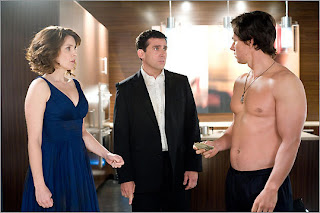
The Boyfriend and I were actually hoping to see a different film, but it was sold out, so we wound up going to see Date Night instead. If this were the 1930s, I'd use the term "screwball comedy" to characterize Date Night, and I always enjoyed those earlier films. Steve Carell and Tina Fey play a couple in the suburbs whose lives have been boring and routine. They still manage to have a "date night" on occasion, but even that is rather monotonous. After hearing that some friends are ending their marriage, Carell and Fey's Phil and Claire Foster decide to go to New York City and have an elegant, romantic evening at a fashionable restaurant. When they discover that you need a reservation far in advance, they assume the identity of another couple whose name is called. A couple of thugs with guns, thinking they are the couple with the reservation, take the Fosters into an alley behind the restaurant and attempt to kill them. What follows is a hilarious pursuit through the city, an homage to those earlier screwball comedies. Mark Wahlberg has a supporting role as one of Claire's former clients, one to whom she was obviously attracted, and he makes the most of his brief time on the screen. Carell's reaction to the flirting going on between his wife and Wahlberg's character is priceless. There's no deep meaning to this film and you won't learn any true life lessons from watching it--you already know that you should appreciate your spouse and spend more time with her or him, and you already know that sometimes a boring life with someone you love is all you truly need--but you'll certainly laugh at some of the situations in which Carell and Fey find themselves and the ways they try to get out of those situations. You don't need gimmicks like 3-D or IMAX in order to make a film like this one entertaining.

Dream Boy is a small independent movie about two next door neighbor boys who fall in love with each other and begin a furtive sexual relationship. The film is set in the South, apparently during the 1970s or early 1980s, based upon the clothing styles, and that naturally means that the boys, who are teens still in high school, have to keep their relationship a secret from their families and friends. Of course, each of the boys is saddled with trouble in their personal lives, and even though neither of the scenarios is all that unique in terms of independent gay film these days, I won't reveal the alleged surprises that occur. I will, however, readily admit to being appalled if not shocked at what happens when the boys join three of their so-called friends for a weekend getaway in the woods. (Why would people who basically live in the woods already feel a need to get away to the woods for an entire weekend? That mentality has always confused me, being from the country myself.) Both of the lead actors, Stephan Bender and Maximilian Roeg, are quite good, and it was a pleasure to see Diana Scarwid and Rickie Lee Jones playing their mothers. And I always enjoy seeing cinematography of the South when it's handled this well; it creates quite an appropriate mood and atmosphere.

How to Train Your Dragon was one of the highlights of the year for me. I'll be honest and admit that I didn't have high expectations based upon the few trailers I had seen, but when The Boyfriend insisted, I went along, paying for the 3-D and IMAX enhanced version as well. And, boy, am I glad that I did. This is a relatively simple tale of a young Viking named Hiccup (voiced by Jay Baruchel) who is an outsider in his village. He doesn't seem to be as athletic as his fellow teens or as interested in dragon slaying as they are. He does, though, want to fit in, so he begins going to classes in how to hunt and kill dragons, and we in the audience learn about the different varieties of dragons--a charming sequence in the film. Hiccup gets involved in defending the village from a dragon attack and injures a rare dragon of the Night Fury variety. He befriends it rather than kills it, and he and the girl he loves (you knew there would be a love interest) enjoy spending time helping the beast Hiccup has nicknamed Toothless regain his ability to fly. I suppose I don't need to tell you that Hiccup becomes the true hero of the story or that Toothless is integral to his success; you have seen enough movies about outsiders to know how this all ends. Yet knowing that some of the standard cliches are going to be included doesn't detract from the joy of watching some thrilling flying sequences or enjoying some broadly comic scenes involving Hiccup and his fellow schoolmates. This was one of the few movies in 3-D that I saw this year that was truly deserving of putting on those funny glasses.
 I have never been a fan of the slasher genre of films. I've seen a few over the years, but I could never quite understand the appeal of watching some crazed killer devise new ways to off people. It always seemed like a sick joke to me that there's a large audience out there for these kinds of movies. The Boyfriend, however, is a huge fan (although he does have an odd tendency to hide his eyes whenever a particularly gruesome murder takes place while I'm always able to watch and be disgusted by what I see--go figure). So you can imagine my reluctance to go see A Nightmare on Elm Street, the "rebooting" of the series that stretches back to the 1980s. I think I had seen one of them, but The Boyfriend has seen them all and wanted to compare this one to those he already knew and apparently enjoyed. Well, even he didn't like this one. It's an attempt to give us a history of how Freddy Krueger (played now by Jackie Earle Haley) became the killer that he is. There's a backstory involving a class of students who all share a secret that I won't reveal even though it isn't all that surprising anyway. They begin dying off one by one, but to be honest, I found it difficult to care about any of them because they are so underdeveloped as individual characters and the actors portraying them are all relatively bland. Even the hunky Kellan Lutz, probably better known from those Eclipse movies, is wasted here, as is the great Connie Britton as the mother of one of the girls who is consistently tormented throughout the film. The Boyfriend, being more knowledgeable about the series, tried to explain some of the links to the original that the filmmakers tried to incorporate, but I think a film should be able to stand on its own, particularly when you're trying to delve into the origin of one of the most famous slashers in the past few decades. At the end of this film, all I felt was as exhausted.

Tim Burton's Alice in Wonderland is, in my opinion, a real mess. It has a convoluted story with far too much bizarre non sequitur type stuff going on. I know it's somewhat spectacular (or garish, depending upon your perspective) to look at, but why couldn't he and his colleagues simply have used the plot from the Lewis Carroll novel? Why did it have to be some meta-narrative about Alice returning to Wonderland and re-encountering people she had met there before in her childhood dreams? And why does it have to be called "Underland" when that's not in the title of the movie? And why were so many talented people wasted in such strange parts? I like Helena Bonham Carter and Anne Hathaway and even Johnny Depp (when he isn't in these latter day Burton movies, that is), but they are just given strange things to do here. None of them get to play fully developed characters because Burton and his collaborators have strayed too far from the source material in their attempts to be clever and artsy. Carroll knew how to make the Mad Hatter (Depp's thankless role here) interesting. All Burton can do is make him dance a very strange dance and mumble jibberish. And having seen Mia Wasikowska (who plays Alice) in other roles such as the daughter in The Kids Are All Right, I know she has a great deal of promise as an actress, but she's so passive and bland as Alice that I couldn't imagine why anyone would build an entire movie around her. Yes, The Boyfriend and I saw this in IMAX and 3-D, but I can't say that either of those "experiences" truly enhanced my enjoyment of this movie.

Clash of the Titans was nowhere near as fun or as campy as the "original" from 1981, but nowadays films have to be special effects extravaganzas in order to be considered event movies like this one. In making the focus primarily upon special effects rather than, say, characterization, the filmmakers tend to lose the interest of a lot of viewers like me. I found this to be little more than what's been dubbed a "popcorn" movie: a few hours away from it and you forget almost all of it. There's little nourishment to be had. Sam Worthington, fresh from his success in Avatar, is the lead here as Perseus, a mortal son of Zeus whom the gods have given the unenviable task of saving the world from Hades and his evil minions. I expect Worthington to continue being promoted as the latest It Boy, but he doesn't strike me as the type who can handle a movie that isn't primarily about the special effects. Hades (played by Ralph Fiennes, who seems to be interested only in supporting parts these days and the odder, the better) plans to conquer the heavens eventually as well, so Zeus (Liam Neeson) has a stake in Perseus' eventual success. You don't really watch a movie like this for the plot, however, or for learning about the mythology upon which it's allegedly based. No, a film like this is primarily an opportunity to see how well the special effects team can create super-sized scorpions (try saying that one three times fast) and the kraken/cracken/whatever, and all of that is well done (although I still miss the days when Ray Harryhausen did special effects for films like this and the viewing of them was more fun). Like Alice in Wonderland, Clash of the Titans had also been converted to 3-D after its making, but we were able to see it in its original 2-D format. Again, I don't think there's anything about 3-D that would have enhanced the experience for me.

The Boyfriend and I were actually hoping to see a different film, but it was sold out, so we wound up going to see Date Night instead. If this were the 1930s, I'd use the term "screwball comedy" to characterize Date Night, and I always enjoyed those earlier films. Steve Carell and Tina Fey play a couple in the suburbs whose lives have been boring and routine. They still manage to have a "date night" on occasion, but even that is rather monotonous. After hearing that some friends are ending their marriage, Carell and Fey's Phil and Claire Foster decide to go to New York City and have an elegant, romantic evening at a fashionable restaurant. When they discover that you need a reservation far in advance, they assume the identity of another couple whose name is called. A couple of thugs with guns, thinking they are the couple with the reservation, take the Fosters into an alley behind the restaurant and attempt to kill them. What follows is a hilarious pursuit through the city, an homage to those earlier screwball comedies. Mark Wahlberg has a supporting role as one of Claire's former clients, one to whom she was obviously attracted, and he makes the most of his brief time on the screen. Carell's reaction to the flirting going on between his wife and Wahlberg's character is priceless. There's no deep meaning to this film and you won't learn any true life lessons from watching it--you already know that you should appreciate your spouse and spend more time with her or him, and you already know that sometimes a boring life with someone you love is all you truly need--but you'll certainly laugh at some of the situations in which Carell and Fey find themselves and the ways they try to get out of those situations. You don't need gimmicks like 3-D or IMAX in order to make a film like this one entertaining.

Dream Boy is a small independent movie about two next door neighbor boys who fall in love with each other and begin a furtive sexual relationship. The film is set in the South, apparently during the 1970s or early 1980s, based upon the clothing styles, and that naturally means that the boys, who are teens still in high school, have to keep their relationship a secret from their families and friends. Of course, each of the boys is saddled with trouble in their personal lives, and even though neither of the scenarios is all that unique in terms of independent gay film these days, I won't reveal the alleged surprises that occur. I will, however, readily admit to being appalled if not shocked at what happens when the boys join three of their so-called friends for a weekend getaway in the woods. (Why would people who basically live in the woods already feel a need to get away to the woods for an entire weekend? That mentality has always confused me, being from the country myself.) Both of the lead actors, Stephan Bender and Maximilian Roeg, are quite good, and it was a pleasure to see Diana Scarwid and Rickie Lee Jones playing their mothers. And I always enjoy seeing cinematography of the South when it's handled this well; it creates quite an appropriate mood and atmosphere.

How to Train Your Dragon was one of the highlights of the year for me. I'll be honest and admit that I didn't have high expectations based upon the few trailers I had seen, but when The Boyfriend insisted, I went along, paying for the 3-D and IMAX enhanced version as well. And, boy, am I glad that I did. This is a relatively simple tale of a young Viking named Hiccup (voiced by Jay Baruchel) who is an outsider in his village. He doesn't seem to be as athletic as his fellow teens or as interested in dragon slaying as they are. He does, though, want to fit in, so he begins going to classes in how to hunt and kill dragons, and we in the audience learn about the different varieties of dragons--a charming sequence in the film. Hiccup gets involved in defending the village from a dragon attack and injures a rare dragon of the Night Fury variety. He befriends it rather than kills it, and he and the girl he loves (you knew there would be a love interest) enjoy spending time helping the beast Hiccup has nicknamed Toothless regain his ability to fly. I suppose I don't need to tell you that Hiccup becomes the true hero of the story or that Toothless is integral to his success; you have seen enough movies about outsiders to know how this all ends. Yet knowing that some of the standard cliches are going to be included doesn't detract from the joy of watching some thrilling flying sequences or enjoying some broadly comic scenes involving Hiccup and his fellow schoolmates. This was one of the few movies in 3-D that I saw this year that was truly deserving of putting on those funny glasses.

Saturday, August 14, 2010
Doc Days
The past decade has seen such tremendous growth in the popularity of documentaries. I have a dear friend who sees almost every documentary that makes it into the theatres and most of the ones that only appear on DVD, but I don't get to see as many of them as I would like. However, this summer I did manage to catch three great ones.
8: The Mormon Proposition is about the ways that the Church of Jesus Christ of Latter Day Saints helped to place the anti-gay Proposition 8 on the ballot in California and then supported it financially to ensure its passage. I doubt many people are unfamiliar with Prop. 8 at this point, given how much it's been in the news the past few weeks with the federal ruling that banning gay couples from marrying is a violation of the Constitution, but even if you think you've heard all there is to say about Prop. 8, you'll still find this film enlightening. Of course, it is one-sided, but it's a political documentary, not a film made for middle-school children. If you weren't angry at the church (the Mormon church or any other one, for that matter), watching this film just might remedy that problem. If nothing else, you should at least begin to question why churches with such vast amounts of wealth are not taxed and are allowed to insinuate themselves into political issues.
Stonewall Uprising attempts to piece together the story of the riots that erupted in New York City in 1969 when the police raided a gay bar called the Stonewall Inn. The riots are often credited with starting the gay rights movement, a gross oversimplification of the truth, to be honest. However, the importance of the Stonewall riots is undeniable as a flashpoint for gay identity. Once gay people realized that they didn't have to remain oppressed, that they could indeed fight back against their oppressors, everything seems to have changed. I admired that the film's makers managed to find so many people who were involved in the riots and their aftermath, including one of the police officers who has since changed his mind about gay people and is supportive of gay rights. It's pretty intriguing historical information that's imparted by the various participants, and I think the movie does an excellent job of placing the riots within the historical context of what it meant to be gay during the time period. The Stonewall riots have been the subject of many books and articles and even a few films over the years, but there's obviously still a great deal to learn. If there's a problem with the film overall, it's the re-enactments of the riots that the film makers shot (because there's apparently no actual footage from the 1969 riots), but I suppose those moments are handled in such a way that you know you're not seeing true archival footage, so it's a minor complaint.
Joan Rivers: A Piece of Work traces one tumultuous year in the life of the comedy legend, with occasional flashbacks to earlier points in her career. There are lots of moments of Rivers on stage, of course, both new and old moments, highlighting just how funny and daring she was when she first became prominent and how funny and daring she remains. However, if you're going to see this documentary, you're probably already familiar with Joan Rivers and her brand of comedy. You already know what a trailblazer she was, what an icon she has become particularly to female comics. What you'll instead take away from this movie is more interesting in terms of her psychology. She's a workaholic who seems to fear that if she stops working, she'll die. She hates to see an empty page in her datebook; she wants to stay busy. I suspect that might have something to do with the somewhat pervasive sense of loneliness she exhibits throughout the film. She also talks candidly about her plastic surgery, particularly when she admits that no man has ever called her pretty. I found that moment devastating. To think how much she has altered her appearance all because she just wants to be found attractive--it's staggering to contemplate that. It's a stunning film, one worthy of analysis by film scholars and feminist theorists for years. I've always loved Rivers; I owned her album What Becomes a Semi-Legend Most? and have always wanted to see her perform live. Watching this film was the next best thing to a live performance. It's more like having a private audience with Rivers herself.
8: The Mormon Proposition is about the ways that the Church of Jesus Christ of Latter Day Saints helped to place the anti-gay Proposition 8 on the ballot in California and then supported it financially to ensure its passage. I doubt many people are unfamiliar with Prop. 8 at this point, given how much it's been in the news the past few weeks with the federal ruling that banning gay couples from marrying is a violation of the Constitution, but even if you think you've heard all there is to say about Prop. 8, you'll still find this film enlightening. Of course, it is one-sided, but it's a political documentary, not a film made for middle-school children. If you weren't angry at the church (the Mormon church or any other one, for that matter), watching this film just might remedy that problem. If nothing else, you should at least begin to question why churches with such vast amounts of wealth are not taxed and are allowed to insinuate themselves into political issues.
Stonewall Uprising attempts to piece together the story of the riots that erupted in New York City in 1969 when the police raided a gay bar called the Stonewall Inn. The riots are often credited with starting the gay rights movement, a gross oversimplification of the truth, to be honest. However, the importance of the Stonewall riots is undeniable as a flashpoint for gay identity. Once gay people realized that they didn't have to remain oppressed, that they could indeed fight back against their oppressors, everything seems to have changed. I admired that the film's makers managed to find so many people who were involved in the riots and their aftermath, including one of the police officers who has since changed his mind about gay people and is supportive of gay rights. It's pretty intriguing historical information that's imparted by the various participants, and I think the movie does an excellent job of placing the riots within the historical context of what it meant to be gay during the time period. The Stonewall riots have been the subject of many books and articles and even a few films over the years, but there's obviously still a great deal to learn. If there's a problem with the film overall, it's the re-enactments of the riots that the film makers shot (because there's apparently no actual footage from the 1969 riots), but I suppose those moments are handled in such a way that you know you're not seeing true archival footage, so it's a minor complaint.
Joan Rivers: A Piece of Work traces one tumultuous year in the life of the comedy legend, with occasional flashbacks to earlier points in her career. There are lots of moments of Rivers on stage, of course, both new and old moments, highlighting just how funny and daring she was when she first became prominent and how funny and daring she remains. However, if you're going to see this documentary, you're probably already familiar with Joan Rivers and her brand of comedy. You already know what a trailblazer she was, what an icon she has become particularly to female comics. What you'll instead take away from this movie is more interesting in terms of her psychology. She's a workaholic who seems to fear that if she stops working, she'll die. She hates to see an empty page in her datebook; she wants to stay busy. I suspect that might have something to do with the somewhat pervasive sense of loneliness she exhibits throughout the film. She also talks candidly about her plastic surgery, particularly when she admits that no man has ever called her pretty. I found that moment devastating. To think how much she has altered her appearance all because she just wants to be found attractive--it's staggering to contemplate that. It's a stunning film, one worthy of analysis by film scholars and feminist theorists for years. I've always loved Rivers; I owned her album What Becomes a Semi-Legend Most? and have always wanted to see her perform live. Watching this film was the next best thing to a live performance. It's more like having a private audience with Rivers herself.
Saturday, May 29, 2010
Quick Takes: Now Available on Blu-Ray and DVD
You know you've not been blogging very often when it comes time to write about some of the movies you've seen "recently" and you have to acknowledge that most of them are already out on DVD. What with the typical busy-ness of the semester and a change in the living arrangements at home (more on that later, perhaps), it's just been difficult to get around to blogging. I've actually seen quite a few movies besides the ones below, but apparently, I'll have to wait until they're on video for me to write about them.

Crazy Heart will likely be remembered as the movie that finally won Jeff Bridges the Oscar for Best Actor. He is certainly very good here as country singer Bad Blake, but it's a performance that's definitely within his typical range. He isn't asked to do anything extraordinarily difficult in this film, just sing a little and act drunk a lot. You'll be happy to know that he excels at both. I enjoyed the music of this film, especially the award-winning title song, more than the plot, what with its Hollywood take on redemption from the depths of alcoholism. The drunken-country-singer-turns-his-life-around theme has been done before and better; if you want the best version of the story, check out Tender Mercies. Crazy Heart pays a nice homage to that earlier, better film by casting Robert Duvall as Bad's friend. It's always a pleasure to see Duvall on screen. There's also a nice cameo appearance by Colin Farrell, who is a pretty talented singer himself, as Bad's former touring partner who's gone on to have a more successful career on his own. I have no idea why he isn't listed in the credits, but I hope he gets another chance to sing in a movie soon. Maggie Gyllenhaal plays a journalist who gets involved with Bad, but I found that entire subplot to be unbelievable. We all know that he's using her and her little son to make up for the bad relationship with his own abandoned son, and we should all know how badly it's going to turn out when you put your trust in a movie alcoholic who hasn't yet found redemption. Gyllenhaal was this year's surprise Oscar nominee in the acting categories. After years of good performances, the Academy chose to reward her for what is essentially a thankless, less-than-challenging part. Go figure. Maybe the Academy members were trying to redress past slights to a lot of actors, and Gyllenhaal got in the mix with Bridges and Sandra Bullock for The Blind Side and Christopher Plummer for The Last Station, but more on that later...

Edge of Darkness is the latest addition to the growing body of evidence that Mel Gibson movies are becoming increasingly obsessed with violence. This film is quite brutal. Gibson plays a police officer whose daughter is murdered when the two of them come home from dinner one night. After an initial suspicion that he was the intended target, Gibson's cop discovers that his daughter has been involved in some subterfuge at the company for which she worked. Gibson should have figured out something was wrong as soon as he discovered that the company's boss is played by Danny Huston. Is Huston turning into Hollywood's go-to bad guy these days? I'm thinking it might be time to throw him a romantic comedy lead just for a change of pace. He, of course, gets beaten up by Gibson's Thomas Craven, as does the actor playing the daughter's boyfriend and a bunch of other people. I even started to suspect that Gibson's character had arranged his daughter's murder just so he could go on this rampage. Frankly, I was exhausted and feeling a bit beaten myself when this movie was over and I could finally leave the theater. Someone should be writing a dissertation on the growing level of violence in Gibson's oeuvre. I know he didn't direct this film, so he isn't fully responsible for its content, but he did select it as an actor. There's some interesting psychosis to examine there, I think.

Fantastic Mr. Fox is, quite simply, a fantastic movie. A stop-motion masterpiece by director Wes Anderson, this charming fable about a fox who has been domesticated but still feels the urge to steal chickens from hen houses is a delight. Everyone of the voice actors--and this is some pretty high-powered talent on display--is great. George Clooney as Mr. Fox plays off his own sly public persona, and Meryl Streep as Mrs. Fox is a calm, reassuring, but firm presence. They should be paired again in a live action film. I loved the interplay between Clooney and Bill Murray as Badger, Mr. Fox's partner in crime. Badger isn't always quite up to speed on what's happening, and Mr. Fox is often frustrated by his need to repeat what seem like simple conclusions to his friend. The highlight of the film, though, is the competition between the Fox family's son Ash, voiced by Jason Schwartzman, and a young fox for whom the family takes responsibility, Kristofferson, voiced by Eric Chase Anderson. Ash always loses to Kristofferson, regardless of the contest, but then again, Kristofferson doesn't even realize there's a competition going on. I'd also point out that the set design and decoration are brilliant, a series of quite stunning masterpieces of location. The amount of time and effort the filmmakers have taken to create this gem is well worth it. This was one of my favorite movies from last year. If you haven't seen this movie yet, rent it immediately and enjoy.

It's Complicated is the kind of movie that Hollywood studios used to make, a generic romantic comedy, no particular deep messages involved, just some fun for the actors and the audience. Meryl Streep (again--what a streak she's on these days) is Jane, a divorced woman who runs a bakery. At her son's college graduation, she reunites with her ex-husband Jake, a randy Alec Baldwin (that may be redundant calling Baldwin randy, I realize), and they begin having an affair. Jake is unhappy with his new, younger wife, played by Lake Bell, especially with her non-stop attempts to get pregnant. Simultaneously, Jane begins dating the architect who is designing the addition to her home, Adam, played by Steve Martin. I don't know why Jane needs a bigger kitchen or even a bigger home. She lives in one of those mansions that only movie middle class people own, with huge rooms and lots of pillows and mementos from a lifetime of travel and such. And I also don't know why it would be difficult for her to choose between these two men; she knows what each one of them is like. Then again, we're not supposed to think too deeply about a movie like this. It's all just harmless fun, and it often brought a smile to my face, particularly whenever John Krasinski appeared on screen. He plays Jane's daughter's fiance, and he's hilarious as the only person who knows that Jane and Jake are having an affair. He may never be a big movie star on his own, but Krasinski could make a long career of playing supporting parts like this one.

The Last Station was advertised as a film about the final days in the life of Russian writer Leo Tolstoy (played expertly here by Christopher Plummer). Instead, the main focus of the plot is really on the musings of a young man named Valentin (James McAvoy) who has been sent to keep an eye on Tolstoy to ensure that the great writer's legacy, including his commitment to a life devoid of material things, is preserved--mainly because there are people like Vladimir Chertkov (Paul Giamatti) who want the Tolstoy fortune to support revolutionary changes in Russia. Chertkov's goals are, unsurprisingly, opposed by Tolstoy's wife Sofya (Helen Mirren), who wants to keep the money for herself and her children. Sofya is quite the drama queen, and Mirren is allowed to chew the scenery almost every moment that she's on screen. It's quite a histrionic performance, and I was surprised that it won her another Oscar nomination for Best Actress. This film also brought Plummer his first ever Oscar nomination (his was for Supporting Actor), and it's a shock to realize that such a long, distinguished career as his has never been acknowledged by the Academy before now. All of this would make for an okay film, but in truth, the movie is really more about Valentin and how he comes to understand what Tolstoy stands for. McAvoy's character has to figure out what kind of life he wishes to live, one that follows the teachings of the writer or one that mirrors the way that the writer actually lives. It's an intriguing question about the conflict that often occurs between one's principles and the (messy) real life one has to live. The Last Station isn't without its genuine moments of emotion, particularly Tolstoy's death at the train station of the title, a scene which much have cinched Mirren's nomination in particular. I suppose this was considered an "event film" given the way that it was released. Here in Los Angeles, it played for only one week in only one theater in December in order to be eligible for Academy consideration, and then it disappeared for a while. When it returned, it again only played for a limited time in a limited number of theaters. Perhaps the distributors were hoping to garner more than just two nominations, but frankly, they should have been grateful given the relatively mundane quality of this film overall.

The Loss of a Teardrop Diamond is based upon an unproduced Tennessee Williams screenplay, and it covers some rather familiar territory for the playwright. Bryce Dallas Howard plays Fisher Willow (terrible name for a character, by the way), a Memphis debutante who doesn't quite fit in with the rest of her alleged social circle. Fisher likes to drink and have fun and enjoys jazz music, all of the things that respectable girls in the 1920s weren't supposed to enjoy. She also has feelings for Jimmy (Chris Evans), the son of the man who runs her family's plantation, but since Jimmy is poor, they could never be allowed to marry or have a relationship. No, Fisher must listen to her grandmother, Cornelia (Ann-Margaret in a role that makes you wish she were cast in movies more often), who wants her to settle down and find a respectable young man to marry. The title diamond earring is one of a pair (family heirlooms, of course) loaned to Fisher by her grandmother for a party. Its loss is the subject of quite a number of accusations and plot contrivances, none of which, frankly, matter (although it does allow for an almost nude scene for Evans, an initial suspect in the diamond's disappearance). This is more of a mood piece than a drama anyway. Ellen Burstyn makes a brief appearance as an older woman who has led a remarkable life on her own terms, but whose current health problems will condemn her to a life under the care of her conservative, traditional family. When Howard's Fisher is in the bedroom with Burstyn's Addie, the film truly comes alive, and it's hard to imagine such a static scene would come across so well. Overall, this is certainly a minor work by the great playwright, and I don't really know that there was any urgency to film this screenplay. It isn't a disaster by any means--although some of the actors' attempts at Southern accents do qualify as such--but it also doesn't add much to our knowledge and appreciation of Williams' achievements.

Nine is the film adaptation of the Broadway musical that was itself an adaptation of Federico Fellini's film 8 1/2. Given all of that adaptation, quite a lot has been lost, and the filmmakers haven't helped their cause any by casting the wrong person in almost every role. I admire Daniel Day-Lewis as an actor, but having an Irishman with little singing ability trying to pass himself off as an Italian director is a bit of a stretch even for the talented Day-Lewis. And his character is so utterly lacking in charm or any other personality trait that would make him seem appealing, I kept wondering what all of these women saw in him. To have such a lackluster character as the centerpiece of the film seems a supreme obstacle to overcome. And, to be frank, the way that the director has chosen to present the songs--as all having come from Guido's consciousness and almost all of them presented on the empty sound stage of his next movie--is a mistake, I think. They should be more integrated into the plot rather than being delivered as if they were asides or diversions from what is a very slight storyline anyway. It's really just about Guido not having an idea for his next movie because he's got too many problems with the women in his life; that's it. I'm also not fond of having actors perform in musicals if they have little or no singing ability, and that is the case with much of this cast. Oscar-nominated Penelope Cruz plays Carla, Guido's mistress, as some sort of hot-blooded, oversexed spitfire. I guess it's mean to be a comic role; it certainly had me laughing but for the wrong reasons. Since she can't really sing, the film creates an elaborate production number for "A Call from the Vatican" in order to distract the audience from noticing her slight voice. Only two of the women in the film acquit themselves with their songs. One is, of course, an actual singer, Fergie from the Black Eyed Peas, who sings "Be Italian" with gusto. The other is Marion Cotillard as Guido's wife Luisa, but only in "My Husband Makes Movies," a delicate, gentle song about her feelings of being abandoned by her spouse. I was not as fond of her other number, "Take It All." I liked the staging of "Cinema Italiano" even if I didn't think Kate Hudson's singing was up to par. Nicole Kidman, who has demonstrated her ability to sing in Moulin Rouge!, is at a loss here with the song "Unusual Way" (which, I must confess, I didn't know was from this musical); it's a weak performance. (And she's an Australian playing a German--there's no end to the lunacy of the assignment of roles here.) I've already written too much about a movie that forces Dame Judi Dench to sing and dance her way through the ridiculous "Folies Bergere." A lot of wasted talent and a lot of bad casting choices all round, sad to say.

The Princess and the Frog takes the fairy tale story of the girl who kisses a frog and turns him into a prince and twists it in a few novel ways. This time, the prince doesn't emerge from the kiss; the girl just turns into a frog too. And this isn't set in a period long, long ago in some mythical land far, far away. This is 1920s New Orleans with all of the jazz music and period atmosphere you'd expect. Tiana (Anika Noni Rose), the "princess" of the title, really just wants to live out her father's dream and open a restaurant; she even has a big number ("Almost There") imagining what the restaurant will be like. It's a song and production very reminiscent of Disney's Beauty and the Beast and the "Be Our Guest" number, but I didn't mind the familiarity because Rose and the rest of the cast are able singers and the music by Randy Newman (with help from Dr. John) is very much in the New Orleans style. We wind up in a bayou--much like the one from the 1970s animated film The Rescuers, to be honest--and there's even a Cajun firefly who is, at times, a little too close to being like Evinrude from that earlier Disney film. Still, the lack of originality doesn't detract from the fun to be had with this film. The princess is really just an ordinary young woman in many ways, and the message that anyone could be a princess is delightfully conveyed here. I could quibble with the choice of Bruno Campos as Prince Naveen, Tiana's frog suitor, who's not African American like much of the rest of the cast, but he is so very funny and charming in the part. And there's also the divine Jenifer Lewis as Mama Odie, who represents the good aspects of voodoo, and Terrence Howard as James, who's there as the bad part of voodoo, both of them a delight to hear/watch. Much was made about how The Princess and the Frog was a return to more traditional methods of making animated films (what with drawing and such instead of computers), and I have to say that the final product is quite beautiful, a jewel of a movie and one of the best of the many good animated films released in 2009.

Shutter Island is a bit of a puzzle, and I'm still not certain exactly how I feel about it. Set during the 1950s, Martin Scorcese's film is very exact when it comes to period detail, and there's no shortage of suspense here. I can't really give too many details about the plot without spoiling it for you if you haven't seen it. Leonardo DiCaprio and Mark Ruffalo are federal marshalls sent to the title island to investigate the disappearance of one of the inmates. The remote island is home to a mental institution for the criminally insane, and a female inmate there has allegedly vanished. Mysterious things begin to happen to the marshalls, DiCaprio's character especially, almost immediately after their arrival, and it isn't long before we as audience members start to question what is real and what is imaginary. The plot hinges upon our questioning, and I was intrigued by that possibility until the last fifteen minutes or so. To be honest and without revealing too much, those final minutes almost ruined the entire film for me. It's not easy to watch what is a very skillfully made film with a lot of remarkable talent--including Ben Kingsley, Max Von Sydow, Michelle Williams, Jackie Earle Haley, and the great Patricia Clarkson in small but significant role--and not feel somewhat disappointed by the cheat of an ending. Stylistically, Scorcese has managed to recreate the look and feel of a lot of films from the decade of the 50s, but plot-wise he and the movie are hampered by Laeta Kalogridis' script.

Watercolors is a love story about a young artist named Danny (Tye Olson) who falls in love with a member of the swim team, Carter (Kyle Clare), who at first resists his attraction to Danny. It's become something of a cliche in gay films to have the shy and sensitive artist fall in love with a jock, and this movie doesn't often rise above the level of cliche, to be honest. The film begins with the adult Danny (Ian Rhodes) at his first solo art exhibit, and we realize that he's been painting images of his high school lover over and over again, much to the chagrin of his current boyfriend, Allan (Edward Finlay). I know that movies like this are important for young people to see; it helps to realize that other people are going through some of the same issues that you are. However, as an older gay man, I've grown a bit tired of watching films that duplicate this plot again and again since these films seem to be excuses to show handsome (well, handsome to some people, I suppose) young men in various states of undress. And Clare's Carter, in particular, spends a lot of time in his Speedos or underwear or nude posing for Danny. Not that I have anything against that on principle, mind you. I just think movies should do a bit more than titillate sometimes. I did admire how supportive Danny's mother (Casey Kramer) and his close friend Amy (Ellie Araiza) and, in particular, his art teacher (the great Karen Black) are, and the three women in those roles are all talented actresses. Unsurprisingly, there is a tragedy at the heart of this film that has led to Danny's artistic obsession. If you've seen gay films before about the coming out experience, you can probably figure it out for yourself. If not, consider this film a template for your future viewings of such movies; they probably won't venture too much from this standard plot either, but at least you'll get to see some cute young boys in their underwear.

Crazy Heart will likely be remembered as the movie that finally won Jeff Bridges the Oscar for Best Actor. He is certainly very good here as country singer Bad Blake, but it's a performance that's definitely within his typical range. He isn't asked to do anything extraordinarily difficult in this film, just sing a little and act drunk a lot. You'll be happy to know that he excels at both. I enjoyed the music of this film, especially the award-winning title song, more than the plot, what with its Hollywood take on redemption from the depths of alcoholism. The drunken-country-singer-turns-his-life-around theme has been done before and better; if you want the best version of the story, check out Tender Mercies. Crazy Heart pays a nice homage to that earlier, better film by casting Robert Duvall as Bad's friend. It's always a pleasure to see Duvall on screen. There's also a nice cameo appearance by Colin Farrell, who is a pretty talented singer himself, as Bad's former touring partner who's gone on to have a more successful career on his own. I have no idea why he isn't listed in the credits, but I hope he gets another chance to sing in a movie soon. Maggie Gyllenhaal plays a journalist who gets involved with Bad, but I found that entire subplot to be unbelievable. We all know that he's using her and her little son to make up for the bad relationship with his own abandoned son, and we should all know how badly it's going to turn out when you put your trust in a movie alcoholic who hasn't yet found redemption. Gyllenhaal was this year's surprise Oscar nominee in the acting categories. After years of good performances, the Academy chose to reward her for what is essentially a thankless, less-than-challenging part. Go figure. Maybe the Academy members were trying to redress past slights to a lot of actors, and Gyllenhaal got in the mix with Bridges and Sandra Bullock for The Blind Side and Christopher Plummer for The Last Station, but more on that later...

Edge of Darkness is the latest addition to the growing body of evidence that Mel Gibson movies are becoming increasingly obsessed with violence. This film is quite brutal. Gibson plays a police officer whose daughter is murdered when the two of them come home from dinner one night. After an initial suspicion that he was the intended target, Gibson's cop discovers that his daughter has been involved in some subterfuge at the company for which she worked. Gibson should have figured out something was wrong as soon as he discovered that the company's boss is played by Danny Huston. Is Huston turning into Hollywood's go-to bad guy these days? I'm thinking it might be time to throw him a romantic comedy lead just for a change of pace. He, of course, gets beaten up by Gibson's Thomas Craven, as does the actor playing the daughter's boyfriend and a bunch of other people. I even started to suspect that Gibson's character had arranged his daughter's murder just so he could go on this rampage. Frankly, I was exhausted and feeling a bit beaten myself when this movie was over and I could finally leave the theater. Someone should be writing a dissertation on the growing level of violence in Gibson's oeuvre. I know he didn't direct this film, so he isn't fully responsible for its content, but he did select it as an actor. There's some interesting psychosis to examine there, I think.
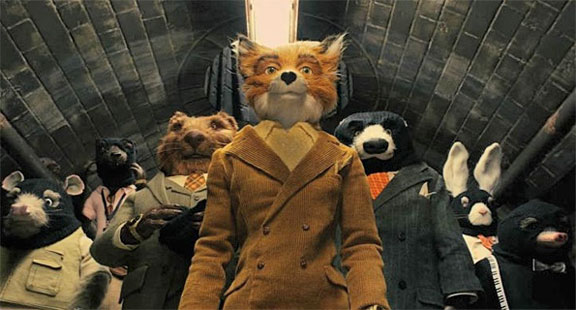
Fantastic Mr. Fox is, quite simply, a fantastic movie. A stop-motion masterpiece by director Wes Anderson, this charming fable about a fox who has been domesticated but still feels the urge to steal chickens from hen houses is a delight. Everyone of the voice actors--and this is some pretty high-powered talent on display--is great. George Clooney as Mr. Fox plays off his own sly public persona, and Meryl Streep as Mrs. Fox is a calm, reassuring, but firm presence. They should be paired again in a live action film. I loved the interplay between Clooney and Bill Murray as Badger, Mr. Fox's partner in crime. Badger isn't always quite up to speed on what's happening, and Mr. Fox is often frustrated by his need to repeat what seem like simple conclusions to his friend. The highlight of the film, though, is the competition between the Fox family's son Ash, voiced by Jason Schwartzman, and a young fox for whom the family takes responsibility, Kristofferson, voiced by Eric Chase Anderson. Ash always loses to Kristofferson, regardless of the contest, but then again, Kristofferson doesn't even realize there's a competition going on. I'd also point out that the set design and decoration are brilliant, a series of quite stunning masterpieces of location. The amount of time and effort the filmmakers have taken to create this gem is well worth it. This was one of my favorite movies from last year. If you haven't seen this movie yet, rent it immediately and enjoy.

It's Complicated is the kind of movie that Hollywood studios used to make, a generic romantic comedy, no particular deep messages involved, just some fun for the actors and the audience. Meryl Streep (again--what a streak she's on these days) is Jane, a divorced woman who runs a bakery. At her son's college graduation, she reunites with her ex-husband Jake, a randy Alec Baldwin (that may be redundant calling Baldwin randy, I realize), and they begin having an affair. Jake is unhappy with his new, younger wife, played by Lake Bell, especially with her non-stop attempts to get pregnant. Simultaneously, Jane begins dating the architect who is designing the addition to her home, Adam, played by Steve Martin. I don't know why Jane needs a bigger kitchen or even a bigger home. She lives in one of those mansions that only movie middle class people own, with huge rooms and lots of pillows and mementos from a lifetime of travel and such. And I also don't know why it would be difficult for her to choose between these two men; she knows what each one of them is like. Then again, we're not supposed to think too deeply about a movie like this. It's all just harmless fun, and it often brought a smile to my face, particularly whenever John Krasinski appeared on screen. He plays Jane's daughter's fiance, and he's hilarious as the only person who knows that Jane and Jake are having an affair. He may never be a big movie star on his own, but Krasinski could make a long career of playing supporting parts like this one.

The Last Station was advertised as a film about the final days in the life of Russian writer Leo Tolstoy (played expertly here by Christopher Plummer). Instead, the main focus of the plot is really on the musings of a young man named Valentin (James McAvoy) who has been sent to keep an eye on Tolstoy to ensure that the great writer's legacy, including his commitment to a life devoid of material things, is preserved--mainly because there are people like Vladimir Chertkov (Paul Giamatti) who want the Tolstoy fortune to support revolutionary changes in Russia. Chertkov's goals are, unsurprisingly, opposed by Tolstoy's wife Sofya (Helen Mirren), who wants to keep the money for herself and her children. Sofya is quite the drama queen, and Mirren is allowed to chew the scenery almost every moment that she's on screen. It's quite a histrionic performance, and I was surprised that it won her another Oscar nomination for Best Actress. This film also brought Plummer his first ever Oscar nomination (his was for Supporting Actor), and it's a shock to realize that such a long, distinguished career as his has never been acknowledged by the Academy before now. All of this would make for an okay film, but in truth, the movie is really more about Valentin and how he comes to understand what Tolstoy stands for. McAvoy's character has to figure out what kind of life he wishes to live, one that follows the teachings of the writer or one that mirrors the way that the writer actually lives. It's an intriguing question about the conflict that often occurs between one's principles and the (messy) real life one has to live. The Last Station isn't without its genuine moments of emotion, particularly Tolstoy's death at the train station of the title, a scene which much have cinched Mirren's nomination in particular. I suppose this was considered an "event film" given the way that it was released. Here in Los Angeles, it played for only one week in only one theater in December in order to be eligible for Academy consideration, and then it disappeared for a while. When it returned, it again only played for a limited time in a limited number of theaters. Perhaps the distributors were hoping to garner more than just two nominations, but frankly, they should have been grateful given the relatively mundane quality of this film overall.

The Loss of a Teardrop Diamond is based upon an unproduced Tennessee Williams screenplay, and it covers some rather familiar territory for the playwright. Bryce Dallas Howard plays Fisher Willow (terrible name for a character, by the way), a Memphis debutante who doesn't quite fit in with the rest of her alleged social circle. Fisher likes to drink and have fun and enjoys jazz music, all of the things that respectable girls in the 1920s weren't supposed to enjoy. She also has feelings for Jimmy (Chris Evans), the son of the man who runs her family's plantation, but since Jimmy is poor, they could never be allowed to marry or have a relationship. No, Fisher must listen to her grandmother, Cornelia (Ann-Margaret in a role that makes you wish she were cast in movies more often), who wants her to settle down and find a respectable young man to marry. The title diamond earring is one of a pair (family heirlooms, of course) loaned to Fisher by her grandmother for a party. Its loss is the subject of quite a number of accusations and plot contrivances, none of which, frankly, matter (although it does allow for an almost nude scene for Evans, an initial suspect in the diamond's disappearance). This is more of a mood piece than a drama anyway. Ellen Burstyn makes a brief appearance as an older woman who has led a remarkable life on her own terms, but whose current health problems will condemn her to a life under the care of her conservative, traditional family. When Howard's Fisher is in the bedroom with Burstyn's Addie, the film truly comes alive, and it's hard to imagine such a static scene would come across so well. Overall, this is certainly a minor work by the great playwright, and I don't really know that there was any urgency to film this screenplay. It isn't a disaster by any means--although some of the actors' attempts at Southern accents do qualify as such--but it also doesn't add much to our knowledge and appreciation of Williams' achievements.

Nine is the film adaptation of the Broadway musical that was itself an adaptation of Federico Fellini's film 8 1/2. Given all of that adaptation, quite a lot has been lost, and the filmmakers haven't helped their cause any by casting the wrong person in almost every role. I admire Daniel Day-Lewis as an actor, but having an Irishman with little singing ability trying to pass himself off as an Italian director is a bit of a stretch even for the talented Day-Lewis. And his character is so utterly lacking in charm or any other personality trait that would make him seem appealing, I kept wondering what all of these women saw in him. To have such a lackluster character as the centerpiece of the film seems a supreme obstacle to overcome. And, to be frank, the way that the director has chosen to present the songs--as all having come from Guido's consciousness and almost all of them presented on the empty sound stage of his next movie--is a mistake, I think. They should be more integrated into the plot rather than being delivered as if they were asides or diversions from what is a very slight storyline anyway. It's really just about Guido not having an idea for his next movie because he's got too many problems with the women in his life; that's it. I'm also not fond of having actors perform in musicals if they have little or no singing ability, and that is the case with much of this cast. Oscar-nominated Penelope Cruz plays Carla, Guido's mistress, as some sort of hot-blooded, oversexed spitfire. I guess it's mean to be a comic role; it certainly had me laughing but for the wrong reasons. Since she can't really sing, the film creates an elaborate production number for "A Call from the Vatican" in order to distract the audience from noticing her slight voice. Only two of the women in the film acquit themselves with their songs. One is, of course, an actual singer, Fergie from the Black Eyed Peas, who sings "Be Italian" with gusto. The other is Marion Cotillard as Guido's wife Luisa, but only in "My Husband Makes Movies," a delicate, gentle song about her feelings of being abandoned by her spouse. I was not as fond of her other number, "Take It All." I liked the staging of "Cinema Italiano" even if I didn't think Kate Hudson's singing was up to par. Nicole Kidman, who has demonstrated her ability to sing in Moulin Rouge!, is at a loss here with the song "Unusual Way" (which, I must confess, I didn't know was from this musical); it's a weak performance. (And she's an Australian playing a German--there's no end to the lunacy of the assignment of roles here.) I've already written too much about a movie that forces Dame Judi Dench to sing and dance her way through the ridiculous "Folies Bergere." A lot of wasted talent and a lot of bad casting choices all round, sad to say.

The Princess and the Frog takes the fairy tale story of the girl who kisses a frog and turns him into a prince and twists it in a few novel ways. This time, the prince doesn't emerge from the kiss; the girl just turns into a frog too. And this isn't set in a period long, long ago in some mythical land far, far away. This is 1920s New Orleans with all of the jazz music and period atmosphere you'd expect. Tiana (Anika Noni Rose), the "princess" of the title, really just wants to live out her father's dream and open a restaurant; she even has a big number ("Almost There") imagining what the restaurant will be like. It's a song and production very reminiscent of Disney's Beauty and the Beast and the "Be Our Guest" number, but I didn't mind the familiarity because Rose and the rest of the cast are able singers and the music by Randy Newman (with help from Dr. John) is very much in the New Orleans style. We wind up in a bayou--much like the one from the 1970s animated film The Rescuers, to be honest--and there's even a Cajun firefly who is, at times, a little too close to being like Evinrude from that earlier Disney film. Still, the lack of originality doesn't detract from the fun to be had with this film. The princess is really just an ordinary young woman in many ways, and the message that anyone could be a princess is delightfully conveyed here. I could quibble with the choice of Bruno Campos as Prince Naveen, Tiana's frog suitor, who's not African American like much of the rest of the cast, but he is so very funny and charming in the part. And there's also the divine Jenifer Lewis as Mama Odie, who represents the good aspects of voodoo, and Terrence Howard as James, who's there as the bad part of voodoo, both of them a delight to hear/watch. Much was made about how The Princess and the Frog was a return to more traditional methods of making animated films (what with drawing and such instead of computers), and I have to say that the final product is quite beautiful, a jewel of a movie and one of the best of the many good animated films released in 2009.

Shutter Island is a bit of a puzzle, and I'm still not certain exactly how I feel about it. Set during the 1950s, Martin Scorcese's film is very exact when it comes to period detail, and there's no shortage of suspense here. I can't really give too many details about the plot without spoiling it for you if you haven't seen it. Leonardo DiCaprio and Mark Ruffalo are federal marshalls sent to the title island to investigate the disappearance of one of the inmates. The remote island is home to a mental institution for the criminally insane, and a female inmate there has allegedly vanished. Mysterious things begin to happen to the marshalls, DiCaprio's character especially, almost immediately after their arrival, and it isn't long before we as audience members start to question what is real and what is imaginary. The plot hinges upon our questioning, and I was intrigued by that possibility until the last fifteen minutes or so. To be honest and without revealing too much, those final minutes almost ruined the entire film for me. It's not easy to watch what is a very skillfully made film with a lot of remarkable talent--including Ben Kingsley, Max Von Sydow, Michelle Williams, Jackie Earle Haley, and the great Patricia Clarkson in small but significant role--and not feel somewhat disappointed by the cheat of an ending. Stylistically, Scorcese has managed to recreate the look and feel of a lot of films from the decade of the 50s, but plot-wise he and the movie are hampered by Laeta Kalogridis' script.

Watercolors is a love story about a young artist named Danny (Tye Olson) who falls in love with a member of the swim team, Carter (Kyle Clare), who at first resists his attraction to Danny. It's become something of a cliche in gay films to have the shy and sensitive artist fall in love with a jock, and this movie doesn't often rise above the level of cliche, to be honest. The film begins with the adult Danny (Ian Rhodes) at his first solo art exhibit, and we realize that he's been painting images of his high school lover over and over again, much to the chagrin of his current boyfriend, Allan (Edward Finlay). I know that movies like this are important for young people to see; it helps to realize that other people are going through some of the same issues that you are. However, as an older gay man, I've grown a bit tired of watching films that duplicate this plot again and again since these films seem to be excuses to show handsome (well, handsome to some people, I suppose) young men in various states of undress. And Clare's Carter, in particular, spends a lot of time in his Speedos or underwear or nude posing for Danny. Not that I have anything against that on principle, mind you. I just think movies should do a bit more than titillate sometimes. I did admire how supportive Danny's mother (Casey Kramer) and his close friend Amy (Ellie Araiza) and, in particular, his art teacher (the great Karen Black) are, and the three women in those roles are all talented actresses. Unsurprisingly, there is a tragedy at the heart of this film that has led to Danny's artistic obsession. If you've seen gay films before about the coming out experience, you can probably figure it out for yourself. If not, consider this film a template for your future viewings of such movies; they probably won't venture too much from this standard plot either, but at least you'll get to see some cute young boys in their underwear.
Sunday, January 10, 2010
Quick Takes 3: Dream Warriors
At this time of year, it's tough to sort through the movies I've seen. Some of them will undoubtedly be nominated for the Best Picture Oscar, especially now that the list has been expanded to include ten films. Those films should really be "saved" for my other blog, so I'm going to discuss films I've seen recently that stand little chance of making it to the final ten in this year's race. I'm not suggesting that they are not worthy films--several of them are exceptional--merely that they don't seem to be generating the kind of "buzz" that gets a movie nominated for the top honor.

Bright Star is the fictional rendering of the love affair between the English Romantic poet John Keats and a remarkable young woman named Fanny Brawne. Keats is already sick with the tuberculosis that will cut his life short, but he cannot stop from developing feelings for the extraordinary Fanny. As played by the gifted Abbie Cornish, Fanny is a strong woman possessed of a keen intellect and a talent for making herself into an artistic creation through her needlework. Directed by Jane Campion, Bright Star deserved greater attention than it received, and if there were any justice, Cornish would be nominated for Best Actress (and deservedly win) for her portrayal of a woman who has to come to terms with the potential loss of the love of her life. Kudos also to Ben Whishaw, who was also good in the completely unnecessary remake of Brideshead Revisited, as the doomed poet and to cinematographer Greig Fraser. Bright Star is simply one of the most beautiful films of the past decade thanks to Fraser's camera work. I will never forget some of the visuals of this film, including a field of lavender flowers and a moment when Fanny lies on her bed allowing curtains to billow over her body--extraordinary moments in a great movie.

The Messenger takes as its subject the difficult work of informing family members of the death of a loved one in the military. It's a serious movie about a formidable task, one that you'd expect few soldiers want to have. Ben Foster stars as Staff Sergeant Will Montgomery, who has been injured in Iraq and is now assigned to work with Woody Harrelson's Captain Tony Stone delivering the bad news to the next of kin. We watch as Montgomery slows learns the nuances of the job and even becomes skilled at going around the military's protocol when dealing with the grieving parents and wives and other family members with whom he and Stone come into contact. He also develops a genuine affection for a young widow played by Samantha Morton, and their friendship almost becomes too much for both of them. It could have been played for cheap emotions, but thanks to a solid script and talented actors, viewers instead sense a tender connection between two lonely people. Anchored by three strong performances, especially the luminous Morton, The Messenger is a complex study of the emotional impact that the current war can have on the people back home.

I found Sherlock Holmes to be typical blockbuster fare, and that's too bad. The potential was there with the inspired pairing of Robert Downey Jr. as Sherlock Holmes and Jude Law as Watson, and perhaps the best part of the movie is their verbal sparring, especially when they are squabbling over such matters as the cleanliness of Holmes' rooms in the house they share. However, the plot seemed unnecessarily complicated, maybe in an attempt to get the crowd to stay until the end of the film so that Holmes could explain all of the connections that we could never have made ourselves, thanks to the stinginess of the script. The stories by Arthur Conan Doyle were frequently action-oriented, but they also had a cerebral quality to them with Holmes figuring out clues and piecing together motives. The movie version goes almost exclusively for action, with one big, expensive sequence after another. Having read "A Scandal in Bohemia," the Holmes story that includes the character of Irene Adler and how she outsmarted Holmes once, I had hoped that more could be done with the character being played here by Rachel McAdams. No such luck, though, because she's really secondary to a plot about a cult of magician types led by Mark Strong's Lord Blackwood. This film really is a mess, but at least, we know there will be a sequel, so maybe there's a chance at redemption yet.

A Single Man has justly received praise for the performance of Colin Firth as George, the college professor attempting to come to terms with the death of his long-time partner. Firth is a revelation here, particularly in the scene where he learns of Jim's death in a car accident and that the family doesn't wish him to attend to funeral. Taking place over a single day in George's life, a rather fateful day when he has chosen to commit suicide, A Single Man does a nice job of evoking the mood of the early 1960s when then film is set, but I did feel director Tom Ford was a bit too obsessed with the appearances of everything, actors included. There's a hypersheen to the visuals that makes them seem somewhat unrealistic, especially in the black-and-white sequences that serve as flashbacks for moments of Tom and George's life together. And I never quite understood what Ford was trying to accomplish with all of the images of eyes that appear throughout the film; I'm sure there's meant to be some symbolic weight to them all, but I couldn't figure it out thanks to how numerous and seemingly random they were. It was a delight to see Julianne Moore as Charley, George's long-time friend, an aging party girl who wishes he were attracted to her. It makes me want to see her and Firth in movies more often, just ones that are less concerned with how people look and more interested in how they think and feel.

The Young Victoria is a visual feast of a movie. It concerns the early years of the reign of Queen Victoria of England, when she was little more than a teenager. As played by Emily Blunt, Victoria is inexperienced but clever, a very fast learner in the ways of the monarchy. She meets a Belgian prince, Albert (played by Rupert Friend), and begins to fall in love with him. However, her mother (Miranda Richardson) and her mother's chief advisor (Mark Strong again, cornering the market on English baddies for the Christmas season) have other plans for her future. She also has to face conflicting political advice from such men as Paul Bettany's Lord Melbourne and Michael Maloney's Sir Robert Peel, the two prime ministers who serve during the start of her historic reign, still the longest in English history. However, the political intrigue tends to become of secondary importance when Victoria and Albert begin to express how they feel for each other. Blunt and Friend are very good together. They have a very natural chemistry, and the film does a fine job of depicting the strength of the bond Victoria and Albert had for each other. This is another film that has been sadly underrated. Perhaps moviegoers are just not interested in historical dramas these days unless there are going to be some explosions along the way? That would be very sad if it were true.
I'm pleasantly surprised by how many good performances I saw in the last couple of months. It's an impressive list just from the five movies described above: Abbie Cornish, Ben Whishaw, Ben Foster, Woody Harrelson, Samantha Morton, Jude Law, Robert Downey Jr., Colin Firth, Julianne Moore, Emily Blunt, and Rupert Friend. Heck, I'll even add Mark Strong to the list; he's actually guite good as a bad guy, and I enjoyed the gusto with which he portrayed Holmes's nemesis. And that doesn't even include a lot of supporting cast members such as the children in Bright Star, especially Edie Martin as Toots, Matthew Goode as Jim in the too-few scenes in which he appears in A Single Man, and Jim Broadbent as King William and Harriet Walter as Queen Adelaide (and Richardson, too, as the Duchess of Kent) in The Young Victoria. Great performances, all of them.

Bright Star is the fictional rendering of the love affair between the English Romantic poet John Keats and a remarkable young woman named Fanny Brawne. Keats is already sick with the tuberculosis that will cut his life short, but he cannot stop from developing feelings for the extraordinary Fanny. As played by the gifted Abbie Cornish, Fanny is a strong woman possessed of a keen intellect and a talent for making herself into an artistic creation through her needlework. Directed by Jane Campion, Bright Star deserved greater attention than it received, and if there were any justice, Cornish would be nominated for Best Actress (and deservedly win) for her portrayal of a woman who has to come to terms with the potential loss of the love of her life. Kudos also to Ben Whishaw, who was also good in the completely unnecessary remake of Brideshead Revisited, as the doomed poet and to cinematographer Greig Fraser. Bright Star is simply one of the most beautiful films of the past decade thanks to Fraser's camera work. I will never forget some of the visuals of this film, including a field of lavender flowers and a moment when Fanny lies on her bed allowing curtains to billow over her body--extraordinary moments in a great movie.

The Messenger takes as its subject the difficult work of informing family members of the death of a loved one in the military. It's a serious movie about a formidable task, one that you'd expect few soldiers want to have. Ben Foster stars as Staff Sergeant Will Montgomery, who has been injured in Iraq and is now assigned to work with Woody Harrelson's Captain Tony Stone delivering the bad news to the next of kin. We watch as Montgomery slows learns the nuances of the job and even becomes skilled at going around the military's protocol when dealing with the grieving parents and wives and other family members with whom he and Stone come into contact. He also develops a genuine affection for a young widow played by Samantha Morton, and their friendship almost becomes too much for both of them. It could have been played for cheap emotions, but thanks to a solid script and talented actors, viewers instead sense a tender connection between two lonely people. Anchored by three strong performances, especially the luminous Morton, The Messenger is a complex study of the emotional impact that the current war can have on the people back home.

I found Sherlock Holmes to be typical blockbuster fare, and that's too bad. The potential was there with the inspired pairing of Robert Downey Jr. as Sherlock Holmes and Jude Law as Watson, and perhaps the best part of the movie is their verbal sparring, especially when they are squabbling over such matters as the cleanliness of Holmes' rooms in the house they share. However, the plot seemed unnecessarily complicated, maybe in an attempt to get the crowd to stay until the end of the film so that Holmes could explain all of the connections that we could never have made ourselves, thanks to the stinginess of the script. The stories by Arthur Conan Doyle were frequently action-oriented, but they also had a cerebral quality to them with Holmes figuring out clues and piecing together motives. The movie version goes almost exclusively for action, with one big, expensive sequence after another. Having read "A Scandal in Bohemia," the Holmes story that includes the character of Irene Adler and how she outsmarted Holmes once, I had hoped that more could be done with the character being played here by Rachel McAdams. No such luck, though, because she's really secondary to a plot about a cult of magician types led by Mark Strong's Lord Blackwood. This film really is a mess, but at least, we know there will be a sequel, so maybe there's a chance at redemption yet.

A Single Man has justly received praise for the performance of Colin Firth as George, the college professor attempting to come to terms with the death of his long-time partner. Firth is a revelation here, particularly in the scene where he learns of Jim's death in a car accident and that the family doesn't wish him to attend to funeral. Taking place over a single day in George's life, a rather fateful day when he has chosen to commit suicide, A Single Man does a nice job of evoking the mood of the early 1960s when then film is set, but I did feel director Tom Ford was a bit too obsessed with the appearances of everything, actors included. There's a hypersheen to the visuals that makes them seem somewhat unrealistic, especially in the black-and-white sequences that serve as flashbacks for moments of Tom and George's life together. And I never quite understood what Ford was trying to accomplish with all of the images of eyes that appear throughout the film; I'm sure there's meant to be some symbolic weight to them all, but I couldn't figure it out thanks to how numerous and seemingly random they were. It was a delight to see Julianne Moore as Charley, George's long-time friend, an aging party girl who wishes he were attracted to her. It makes me want to see her and Firth in movies more often, just ones that are less concerned with how people look and more interested in how they think and feel.

The Young Victoria is a visual feast of a movie. It concerns the early years of the reign of Queen Victoria of England, when she was little more than a teenager. As played by Emily Blunt, Victoria is inexperienced but clever, a very fast learner in the ways of the monarchy. She meets a Belgian prince, Albert (played by Rupert Friend), and begins to fall in love with him. However, her mother (Miranda Richardson) and her mother's chief advisor (Mark Strong again, cornering the market on English baddies for the Christmas season) have other plans for her future. She also has to face conflicting political advice from such men as Paul Bettany's Lord Melbourne and Michael Maloney's Sir Robert Peel, the two prime ministers who serve during the start of her historic reign, still the longest in English history. However, the political intrigue tends to become of secondary importance when Victoria and Albert begin to express how they feel for each other. Blunt and Friend are very good together. They have a very natural chemistry, and the film does a fine job of depicting the strength of the bond Victoria and Albert had for each other. This is another film that has been sadly underrated. Perhaps moviegoers are just not interested in historical dramas these days unless there are going to be some explosions along the way? That would be very sad if it were true.
I'm pleasantly surprised by how many good performances I saw in the last couple of months. It's an impressive list just from the five movies described above: Abbie Cornish, Ben Whishaw, Ben Foster, Woody Harrelson, Samantha Morton, Jude Law, Robert Downey Jr., Colin Firth, Julianne Moore, Emily Blunt, and Rupert Friend. Heck, I'll even add Mark Strong to the list; he's actually guite good as a bad guy, and I enjoyed the gusto with which he portrayed Holmes's nemesis. And that doesn't even include a lot of supporting cast members such as the children in Bright Star, especially Edie Martin as Toots, Matthew Goode as Jim in the too-few scenes in which he appears in A Single Man, and Jim Broadbent as King William and Harriet Walter as Queen Adelaide (and Richardson, too, as the Duchess of Kent) in The Young Victoria. Great performances, all of them.
Friday, September 25, 2009
Quick Takes 2: Electric Boogaloo
The movies have piled up again. Thanks to the events of summer and a frantic start to the fall semester, I haven't had time to write much about the various movies I've seen. So here, briefly, are some remembrances of films past.

Adam stars Hugh Dancy as a young man with Asperger's Syndrome who must learn to live on his own after his father passes away. He falls in love with his upstairs neighbor, Beth (Rose Byrne), and slowly begins to find his way in society, haltingly and unsuccessfully most of the time, though. I can't say that I particularly enjoyed this film, because except for the inclusion of the Asperger's Syndrome, there's nothing really new here. It's a quirky independent movie with quirky independent character types. You're likely seen this film before, just with a different issue that what Adam has. Dancy is good, much better than, say, Dustin Hoffman was in Rain Man. Where Hoffman was all gestures and tics as an autistic adult, Dancy is very subtle and sweet (really). However, I'm not sure that his performance is truly substantial enough to recommend watching the entire film.

All About Steve was a waste of time and money, frankly. I went with a friend because, as he put it, "it looks funny from the trailer." Whatever jokes were in this film must have all appeared in the trailer. Sandra Bullock--who needs some career advice and fast--plays a woman who creates crossword puzzles for a living (well, as much a living as you can have living at home with your parents and making a little money from crosswords). She goes on a date with a local TV cameraman, the vastly underused Bradley Cooper, and thinks they are destined to be together after he tries to brush her off too politely. She has a little trouble with reality, I suppose. Thomas Haden Church is a lot of fun to watch as the reporter Cooper works with regularly, but he seems to be in his own movie at times. Avoid this film at all costs unless you want to see how a movie turns the incident of a dozen deaf children falling into a well into comic fodder.

District 9 was one of my favorite movies of the summer. An alien spaceship gets stuck over South Africa, and rather than exterminate the aliens, the government decides to restrict them to one slum area, the District 9 of the title. A government agent, played by Sharlto Copley, shows up with the troops to help relocate the aliens, many of whom do not want to leave. One, in particular, wants to stay because he thinks he has almost found the secret to reviving the engine of the mothership. Through an odd series of events, the agent becomes infected with an alien chemical and begins turning into one of the "prawns," as the aliens are known. Yes, I realize the allegory is pretty heavy-handed for those of us trained to find allegory, but I have a sense that most of the people leaving the theater never caught on to the racial and ethnic politics underpinning this film. I'm not always a fan of science fiction movies, but District 9 is compelling, particularly for the performance of Copley as the frantic human trying to make some short of connection with the aliens with whom he now shares DNA and for the documentary style the film makers have used here. The visual effects blend smoothly into the hand-held camera work to make us feel like we are witnessing an actual news story.

(500) Days of Summer has two things working in its favor. It has a clever structure, going back and forth in time to show different days in a relationship between a young man and woman who work in the same office where greeting cards are created. And it has Joseph Gordon-Levitt as the male lead. Otherwise, if you put the story elements in chronological order, you'd have a fairly pedestrian love plot and a really vicious portrayal of a young woman named Summer (Zooey Deschanel) who breaks, seemingly maliciously, the heart of Gordon-Levitt's Tom. I've admired Gordon-Levitt's work in Mysterious Skin and Brick, and he's very good in this film as well. Too bad the film doesn't really rise to the level of his performance. It's just too mean to its female lead to make you fall in love with it.

Inglourious Basterds was the most fun I've had at the movies all year. Quentin Tarantino's latest film is an intriguing experiment in alternative history. What if Hitler and the highest ranking Nazis were killed before the end of the war? The movie takes place primarily in Occupied France and features a gange of pretty ruthless Nazi hunters led by Brad Pitt as Lt. Aldo Raine. Pitt seems to be having a blast in this role, and it's good to see him enjoying acting (more so than he did in that tiring The Curious Case of Benjamin Button). To attempt to summarize a Tarantino movie is really a fruitless exercise, so let me concentrate on two aspects of the movie. The first is the acting of Christoph Waltz as Col. Hans Landa. What a find this guy is. Multi-lingual and hugely talented, he's spellbinding whenever he's on the screen. The rest of the cast, including director Eli Roth as one of Raines' crew, are uniformly good too. And then there's the music. Does anyone have a better ear for music than Tarantino? In particular, his use of David Bowie's "Putting Out Fire" from the movie Cat People was brilliant. That scene alone should put an Oscar in Tarantino's hands next year. I wish more filmmakers were as audacious as Tarantino. We'd get to see a lot more interesting movies if they were.


Julie & Julia features two great performances from two great actresses. It's no surprise that Meryl Streep is at the peak of her considerable acting talent portraying chef Julia Child. Streep has such a joy that radiates through her in this part. How she's able to give one standout performance after another is a testament to her skill. She's quickly surpassing many of the greats (Davis, Garbo, Hepburn) in my esteem. The other performance, though, is equally good, and that's the one that has been most criticized. Amy Adams plays a bureaucrat who decides to cook all of the recipes in Child's book during one year. Adams is meant to represent a certain type of person in her generation: self-absorbed, prone to emotional outbursts if things go wrong. I think she nails the part and allows us to see the contrast between her Julie and Streep's Julia (and to see the many, many traits they have in common). A quick shout-out for Stanley Tucci as Child's husband Paul. If all of us had spouses that supportive and, frankly, that randy, we'd all be as happy as Child was.

Ponyo is an absolute delight. It's an animated film by the Japanese master Hayao Miyazaki (of Spirited Away and Howl's Moving Castle and My Neighbor Totoro fame), and it is just glorious in its use of color and action. The title character is a goldfish who meets by accident a little boy named Sosuke. So enamored does Ponyo become with him that she transforms into a little girl with wild red hair and a wild attitude to match. I mean, it's not every little girl who can run on top of the waves of a tsunami, but Ponyo can. She gains her powers from her father, Fujimoto, who is sort of a wizard trying to protect the sea creatures from the ill effects of mankind, and her mother, who is a sort of goddess of the sea. I know that all sounds strange, but this movie is so charming that you find yourself accepting the most remarkable of events as being possible. I'd have a tough time choosing between this film and Up as the best animated feature of the year so far. They are both such masterpieces and worth a second or third or even fourth viewing.

Adam stars Hugh Dancy as a young man with Asperger's Syndrome who must learn to live on his own after his father passes away. He falls in love with his upstairs neighbor, Beth (Rose Byrne), and slowly begins to find his way in society, haltingly and unsuccessfully most of the time, though. I can't say that I particularly enjoyed this film, because except for the inclusion of the Asperger's Syndrome, there's nothing really new here. It's a quirky independent movie with quirky independent character types. You're likely seen this film before, just with a different issue that what Adam has. Dancy is good, much better than, say, Dustin Hoffman was in Rain Man. Where Hoffman was all gestures and tics as an autistic adult, Dancy is very subtle and sweet (really). However, I'm not sure that his performance is truly substantial enough to recommend watching the entire film.

All About Steve was a waste of time and money, frankly. I went with a friend because, as he put it, "it looks funny from the trailer." Whatever jokes were in this film must have all appeared in the trailer. Sandra Bullock--who needs some career advice and fast--plays a woman who creates crossword puzzles for a living (well, as much a living as you can have living at home with your parents and making a little money from crosswords). She goes on a date with a local TV cameraman, the vastly underused Bradley Cooper, and thinks they are destined to be together after he tries to brush her off too politely. She has a little trouble with reality, I suppose. Thomas Haden Church is a lot of fun to watch as the reporter Cooper works with regularly, but he seems to be in his own movie at times. Avoid this film at all costs unless you want to see how a movie turns the incident of a dozen deaf children falling into a well into comic fodder.

District 9 was one of my favorite movies of the summer. An alien spaceship gets stuck over South Africa, and rather than exterminate the aliens, the government decides to restrict them to one slum area, the District 9 of the title. A government agent, played by Sharlto Copley, shows up with the troops to help relocate the aliens, many of whom do not want to leave. One, in particular, wants to stay because he thinks he has almost found the secret to reviving the engine of the mothership. Through an odd series of events, the agent becomes infected with an alien chemical and begins turning into one of the "prawns," as the aliens are known. Yes, I realize the allegory is pretty heavy-handed for those of us trained to find allegory, but I have a sense that most of the people leaving the theater never caught on to the racial and ethnic politics underpinning this film. I'm not always a fan of science fiction movies, but District 9 is compelling, particularly for the performance of Copley as the frantic human trying to make some short of connection with the aliens with whom he now shares DNA and for the documentary style the film makers have used here. The visual effects blend smoothly into the hand-held camera work to make us feel like we are witnessing an actual news story.

(500) Days of Summer has two things working in its favor. It has a clever structure, going back and forth in time to show different days in a relationship between a young man and woman who work in the same office where greeting cards are created. And it has Joseph Gordon-Levitt as the male lead. Otherwise, if you put the story elements in chronological order, you'd have a fairly pedestrian love plot and a really vicious portrayal of a young woman named Summer (Zooey Deschanel) who breaks, seemingly maliciously, the heart of Gordon-Levitt's Tom. I've admired Gordon-Levitt's work in Mysterious Skin and Brick, and he's very good in this film as well. Too bad the film doesn't really rise to the level of his performance. It's just too mean to its female lead to make you fall in love with it.

Inglourious Basterds was the most fun I've had at the movies all year. Quentin Tarantino's latest film is an intriguing experiment in alternative history. What if Hitler and the highest ranking Nazis were killed before the end of the war? The movie takes place primarily in Occupied France and features a gange of pretty ruthless Nazi hunters led by Brad Pitt as Lt. Aldo Raine. Pitt seems to be having a blast in this role, and it's good to see him enjoying acting (more so than he did in that tiring The Curious Case of Benjamin Button). To attempt to summarize a Tarantino movie is really a fruitless exercise, so let me concentrate on two aspects of the movie. The first is the acting of Christoph Waltz as Col. Hans Landa. What a find this guy is. Multi-lingual and hugely talented, he's spellbinding whenever he's on the screen. The rest of the cast, including director Eli Roth as one of Raines' crew, are uniformly good too. And then there's the music. Does anyone have a better ear for music than Tarantino? In particular, his use of David Bowie's "Putting Out Fire" from the movie Cat People was brilliant. That scene alone should put an Oscar in Tarantino's hands next year. I wish more filmmakers were as audacious as Tarantino. We'd get to see a lot more interesting movies if they were.


Julie & Julia features two great performances from two great actresses. It's no surprise that Meryl Streep is at the peak of her considerable acting talent portraying chef Julia Child. Streep has such a joy that radiates through her in this part. How she's able to give one standout performance after another is a testament to her skill. She's quickly surpassing many of the greats (Davis, Garbo, Hepburn) in my esteem. The other performance, though, is equally good, and that's the one that has been most criticized. Amy Adams plays a bureaucrat who decides to cook all of the recipes in Child's book during one year. Adams is meant to represent a certain type of person in her generation: self-absorbed, prone to emotional outbursts if things go wrong. I think she nails the part and allows us to see the contrast between her Julie and Streep's Julia (and to see the many, many traits they have in common). A quick shout-out for Stanley Tucci as Child's husband Paul. If all of us had spouses that supportive and, frankly, that randy, we'd all be as happy as Child was.

Ponyo is an absolute delight. It's an animated film by the Japanese master Hayao Miyazaki (of Spirited Away and Howl's Moving Castle and My Neighbor Totoro fame), and it is just glorious in its use of color and action. The title character is a goldfish who meets by accident a little boy named Sosuke. So enamored does Ponyo become with him that she transforms into a little girl with wild red hair and a wild attitude to match. I mean, it's not every little girl who can run on top of the waves of a tsunami, but Ponyo can. She gains her powers from her father, Fujimoto, who is sort of a wizard trying to protect the sea creatures from the ill effects of mankind, and her mother, who is a sort of goddess of the sea. I know that all sounds strange, but this movie is so charming that you find yourself accepting the most remarkable of events as being possible. I'd have a tough time choosing between this film and Up as the best animated feature of the year so far. They are both such masterpieces and worth a second or third or even fourth viewing.
Sunday, July 5, 2009
Quick Takes
I have been to several movies in the past month, but I rarely have time to blog about them these days. (I read books, too, but hardly anyone else these days seems to care about that activity. Try talking to someone outside of an English department about a book you recently read and see what happens to you.) In the interest of sharing, here are some random thoughts on recent films.
I really enjoyed Easy Virtue. It's better than the reviews it received. Jessica Biel plays an American race car driver who falls in love with and quickly marries the son of an aristocratic English family (of course, that phrase could be redundant for the movies). The family, headed by that always reliable charmer Colin Firth and the witheringly funny Kristin Scott Thomas, seems to be rather traditional and conservative, at least if Scott Thomas' Mrs. Whittaker is any example. The movie is based upon the Noel Coward play, and I love his ear for dialogue. There are some great moments of slapstick here, and several scenes where characters analyze each other with scalpel sharp tongues--witty stuff. I'd also like to praise the music, all done in the style of the 1920s and 1930s, including a musical hall version of the 1976 classic "Car Wash." I downloaded the songs as soon as I got home from the theater.
The Hangover has gotten a lot of press this summer, and frankly, I was a bit underwhelmed by it. Yes, it's pretty funny, but that's mostly because of the situation, not because of, say, the actual dialogue, which is rather cliched. It's just a "bad trip to Vegas" movie with a veneer of cleverness over it. I did like the performances by Bradley Cooper and Ed Helms, and Zach Galifianakis seems like he's in another movie altogether, which really works here, oddly enough. Any movie that manages to get mileage out of a cameo from Mike Tyson can't be all bad, but can we please stop with the "fag jokes" already? I'm so bored with having comedies, in particular, resort to using such stupid humor.
My Life in Ruins stars Nia Vardalos of My Big Fat Greek Wedding fame. Here she's a former university professor reduced to giving tours of the Greek islands. Of course, most of the people who wind up on her bus are what they used to call "ugly Americans," and they fit every stereotype you could imagine for tourists. I will admit to being temporarily intrigued by the fellow who's an IHOP manager, but then he started talking about syrup and lost me. The real reason to see this movie--other than a few fun moments with Richard Dreyfus--is Vardalos' co-star, Alexis Georgoulis, whose character is the sadly named Poupi Kakas. He starts out as the scary looking bus driver and turns into the hot Greek stud by movie's end. Hey, at least, you'll have something to look at besides ruins. It's all a cliche, frankly, but Nia and Alexis actually made an appearance at the screening I attended to answer questions and promote the film, so I'm willing to forgive them this time. It's all relatively harmless fun, and the scenery (of all kinds) is quite beautiful.
Sex Positive is a documentary about one of the three men credited with creating the concept of safe sex. His name is Richard Berkowitz, and he's an intriguing central figure. He isn't an easy interview by any means, and he's always changing his mind about comments that he has made. He's sometimes brazen about his past, and at other times, he doesn't really want to talk about some of the things he's done. The other people who are interviewed seem to appreciate and accept just how difficult Berkowitz and his colleagues, Michael Callen and Dr. Joseph Sonnabend, had it when they tried to convince gay men in the 1980s to try, for example, using condoms. This is a significant historical document of a specific time in our history, one that is not frequently discussed for any number of reasons.
The Taking of Pelham 1 2 3 is one of the most unnecessary movies released this year. It's a remake of a 1974 film which was perfectly fine as it was. There was no real need to make a new version of this film because none of the updates to the story really contribute to its being more interesting. The lead performance by Denzel Washington is good, but the other lead actor, John Travolta, is in fun "ham" mode in this one. I could never quite figure out why his character looks the way he does: the haircut, the tattoos, everything. I kept thinking it was supposed to be some kind of ethnic representation, but the film takes you off that path pretty quickly. Rent the original instead. You'll have a better time.
Transformers: Revenge of the Fallen is truly a silly movie. I suppose it could serve as the perfect example of a popcorn movie, no substance, all style, just like everything director Michael Bay does. The explosions were frequent but not too loud, thankfully. Shia LaBeouf and Megan Fox are fine if a bit bland as the "heroes," but I'd rather watch sidekick Ramon Rodriguez. He's at least interesting. I have never seen all of the first Transformers movie, and I wasn't a fan of the TV show either. I don't even know when the show as on the air. Still, if a friend invites you and you want to get out of the house for a few hours, I suppose this is harmless enough. After the show, I overheard a young boy say it was "the awesomest movie ever." I'm glad he had a good time, but it does make me wonder about the future of America if he's any example. And I still want to know how the robots can be almost five times as large as the cars or trucks from which they transform. Yes, I know I'm not supposed to puzzle over questions like that in a movie like this.
I really enjoyed Easy Virtue. It's better than the reviews it received. Jessica Biel plays an American race car driver who falls in love with and quickly marries the son of an aristocratic English family (of course, that phrase could be redundant for the movies). The family, headed by that always reliable charmer Colin Firth and the witheringly funny Kristin Scott Thomas, seems to be rather traditional and conservative, at least if Scott Thomas' Mrs. Whittaker is any example. The movie is based upon the Noel Coward play, and I love his ear for dialogue. There are some great moments of slapstick here, and several scenes where characters analyze each other with scalpel sharp tongues--witty stuff. I'd also like to praise the music, all done in the style of the 1920s and 1930s, including a musical hall version of the 1976 classic "Car Wash." I downloaded the songs as soon as I got home from the theater.
The Hangover has gotten a lot of press this summer, and frankly, I was a bit underwhelmed by it. Yes, it's pretty funny, but that's mostly because of the situation, not because of, say, the actual dialogue, which is rather cliched. It's just a "bad trip to Vegas" movie with a veneer of cleverness over it. I did like the performances by Bradley Cooper and Ed Helms, and Zach Galifianakis seems like he's in another movie altogether, which really works here, oddly enough. Any movie that manages to get mileage out of a cameo from Mike Tyson can't be all bad, but can we please stop with the "fag jokes" already? I'm so bored with having comedies, in particular, resort to using such stupid humor.
My Life in Ruins stars Nia Vardalos of My Big Fat Greek Wedding fame. Here she's a former university professor reduced to giving tours of the Greek islands. Of course, most of the people who wind up on her bus are what they used to call "ugly Americans," and they fit every stereotype you could imagine for tourists. I will admit to being temporarily intrigued by the fellow who's an IHOP manager, but then he started talking about syrup and lost me. The real reason to see this movie--other than a few fun moments with Richard Dreyfus--is Vardalos' co-star, Alexis Georgoulis, whose character is the sadly named Poupi Kakas. He starts out as the scary looking bus driver and turns into the hot Greek stud by movie's end. Hey, at least, you'll have something to look at besides ruins. It's all a cliche, frankly, but Nia and Alexis actually made an appearance at the screening I attended to answer questions and promote the film, so I'm willing to forgive them this time. It's all relatively harmless fun, and the scenery (of all kinds) is quite beautiful.
Sex Positive is a documentary about one of the three men credited with creating the concept of safe sex. His name is Richard Berkowitz, and he's an intriguing central figure. He isn't an easy interview by any means, and he's always changing his mind about comments that he has made. He's sometimes brazen about his past, and at other times, he doesn't really want to talk about some of the things he's done. The other people who are interviewed seem to appreciate and accept just how difficult Berkowitz and his colleagues, Michael Callen and Dr. Joseph Sonnabend, had it when they tried to convince gay men in the 1980s to try, for example, using condoms. This is a significant historical document of a specific time in our history, one that is not frequently discussed for any number of reasons.
The Taking of Pelham 1 2 3 is one of the most unnecessary movies released this year. It's a remake of a 1974 film which was perfectly fine as it was. There was no real need to make a new version of this film because none of the updates to the story really contribute to its being more interesting. The lead performance by Denzel Washington is good, but the other lead actor, John Travolta, is in fun "ham" mode in this one. I could never quite figure out why his character looks the way he does: the haircut, the tattoos, everything. I kept thinking it was supposed to be some kind of ethnic representation, but the film takes you off that path pretty quickly. Rent the original instead. You'll have a better time.
Transformers: Revenge of the Fallen is truly a silly movie. I suppose it could serve as the perfect example of a popcorn movie, no substance, all style, just like everything director Michael Bay does. The explosions were frequent but not too loud, thankfully. Shia LaBeouf and Megan Fox are fine if a bit bland as the "heroes," but I'd rather watch sidekick Ramon Rodriguez. He's at least interesting. I have never seen all of the first Transformers movie, and I wasn't a fan of the TV show either. I don't even know when the show as on the air. Still, if a friend invites you and you want to get out of the house for a few hours, I suppose this is harmless enough. After the show, I overheard a young boy say it was "the awesomest movie ever." I'm glad he had a good time, but it does make me wonder about the future of America if he's any example. And I still want to know how the robots can be almost five times as large as the cars or trucks from which they transform. Yes, I know I'm not supposed to puzzle over questions like that in a movie like this.
Subscribe to:
Posts (Atom)